

How Lighting Affects Your Home’s Paint Color
February 21, 2024
Lighting Expert, @lightsdotcom
Why do your navy blue walls look black at certain times of day? And why does a normally white room appear yellow in the evenings? If you’ve ever experienced these perplexities, you can attest to how much light can affect our perception of color.
In fact, the direction that light hits a wall and the positioning of the sun can have an influence on what color that wall appears to be to the naked eye.
So how do you gauge paint colors and select lighting that will give you the color you want? There’s a lot that goes into it, so here’s a breakdown.

Natural Lighting
- Natural light plays an integral part in how we perceive paint colors in our home. A general rule of thumb is that if your room is North facing it will let in soft light, producing a cool effect. This means dark paints will look darker and light paints will be more dim.
- On the other hand, if the room receives South facing light exposure, it will have much more intense light throughout the day. Dark colors will appear brighter and light colors (particularly white) can make the room look washed out.
- Rooms on the West side of your home will receive warm light in the evenings and shadows in the mornings, and rooms with exposure from the East can brighten up your room before noon and make it cooler in the evenings.
It’s a lot to consider, but luckily by using the right artificial lighting you can control the colors and hues of your home at any time of day, regardless of natural light exposure. Here’s how!
Artificial Lighting
- Standard soft white incandescent or LED light bulbs provide warm, natural lighting and are generally 2700K to 3000K in color temperature. These lights will make bright colors (red/orange/yellow) appear slightly more intense, and cooler paints (green/blue/gray) will appear a little duller.
- Even warmer than soft white bulbs are vintage “Edison” bulbs, usually dimmer and less than 2700K. Vintage bulbs are known to add a warm, sometimes yellow, and occasionally amber hue to a room. Many people use vintage lighting options to warm up a room that doesn’t get much natural sunlight, or to complement warm paint colors.
- On the contrary, fluorescent lights and "daylight" bulbs are known for giving off a blue-ish, cooler light, around 5000K or higher. Fluorescents pair well with cooler paints such as those in the blue/green/gray family. Usually, these cool lights are used in workspaces or kitchens, but can feel more sterile than soft white bulbs.
Right: West-facing windows will let in much warmer natural light in the late afternoon until sundown. Shown is the Nadia Small LED Pendant with 2700K soft white color temperature.


Light Positioning
- Also keep in mind the many different effects that can be created through how you position your lighting. Chandeliers and ceiling fixtures like semi-flush mounts offer a lot of general light to a room, and they distribute that light really well throughout the space.
- Table lamps and floor lamps are a great option if your room doesn’t get enough natural light, but you don’t want to affect the wall colors very much. By restricting the light source to one area of the room, you can limit the impact of lighting on your paint color.
- Task lighting and spot lighting can also be helpful to brighten up dark areas of a room or bring attention to architecture or art. An adjustable wall sconce placed next to a bed or seating area is great for reading without changing the overall color of the room. Picture lights or adjustable spot lights can be used to highlight art or bookshelves and bring visual interest.
Left: A larger chandelier like the Foster 9 Light will provide general soft lighting, while a table lamp can provide brighter task lighting in a specific area.
Final Tips
- When painting, it’s highly recommended that you always do a test area on your walls. Simply holding up the paint swatch to a wall won’t give you an accurate idea of what the effect will be. Test the paint on each wall in the room by doing a patch with two coats, and pay attention to how it is affected by the natural light at different times of the day.
- If one wall receives much more light than others, you could even go a shade lighter or darker on that wall just so that it fits more appropriately with the other walls in the room. Use the experts at your paint store for assistance and advice.
- Lastly, don’t forget that objects also play a part in the overall perception of a room. Furniture, decor, and wall hangings all affect how light is reflected and absorbed. Be mindful of the fact that if you’re painting and testing lighting in an empty room, the room might feel slightly different once you move in the furniture.
Shown Below: Castell 6 Light Linear Pendant in Aged Brass and the Langdon Adjustable One Arm Wall Sconce in Modern Brass and Matte Black


Q&A: Submit your question
All questions are answered within 24 hours.
Other Stories You'll Love

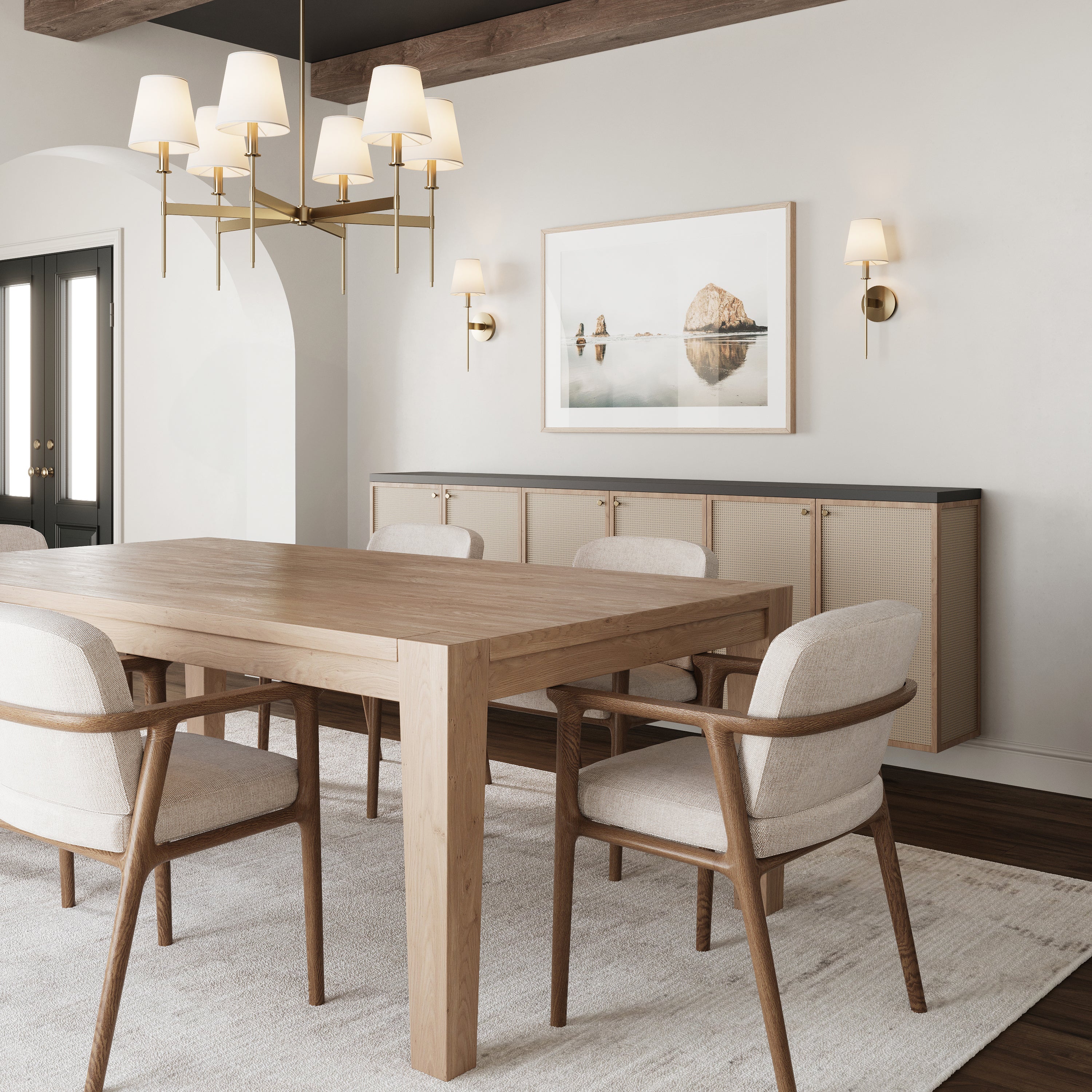
Answers To Your Dining Room Chandelier Questions
Choosing and installing the right dining room chandelier for above your table can truly determine the ambiance of the room. There are tips for guaranteeing light is distributed evenly throughout the room, and there are proper installation tricks to ensure none of your guests are eating in the dark!


