
How to Choose Color Temperature for Every Room

Lighting Expert
September 25, 2026
2700K vs. 3000K vs. 4000K vs. 5000K: How to Choose Color Temperature for Every Room
What is the difference between Soft White and Daylight bulbs? Learn how lighting color temperature works, what Kelvin ratings mean, and whether 2700K, 3000K, or 5000K is best for each room in your home.
Light color temperature is measured on the Kelvin (K) scale and dictates whether a space feels warm and relaxing or cool and energetic. Choosing between 2700K (Soft White), 3000K (Warm White), 4000K (Cool White), and 5000K (Bright White, typically not recommended for residential spaces) depends on the room's function, decorative finish, and time-of-day usage.
Whether you’re choosing a socketed light bulb or a fixture with integrated LED lighting, the light will have a color temperature listed. If you loved the familiar “Soft White” glow of traditional incandescent bulbs, look for 2700K as it most closely recreates that warm, comfortable light.
Quick Reference: Color Temperature Matrix
Kelvin Rating | Light Appearance | Atmosphere & Vibe | Best Room Applications |
|---|---|---|---|
2700K | Soft / Golden Warm | Cozy, intimate, relaxing | Bedrooms, Dining Rooms, Living Rooms |
3000K | Crisp / Warm Neutral | Inviting, clear, balanced | Kitchens, Vanities, Living Rooms, Foyers |
4000K | Cool White / Daylight | High visibility, energetic | Home Offices, Laundries, Task Areas |
5000K | Bright White / Daylight | Clinical, high-alert (Not recommended for residential) | Garages, Commercial Spaces, Warehouses |
At a Glance: Understanding Kelvin Ratings
• 2700K (Soft White): Produces a warm, golden, candle-like glow. It is optimal for evening unwinding, intimate dining, and cozy residential spaces.
• 3000K (Warm White): Delivers a clean, versatile warm light with greater visual clarity. It provides a modern, crisp feel without looking stark or clinical.
• 4000K (Cool White): Replicates neutral daylight to enhance focus, contrast, and color precision. It is best suited for task-driven work environments.
• 5000K (Bright White): Emits a very bright, cool white light with a slight blue cast that mimics direct noon sunlight. Because it creates a stark, clinical atmosphere, it is generally not recommended for residential living spaces and is best reserved for commercial settings, utility garages, or heavy-duty workshop areas.


Room-by-Room Kelvin Selection Guide
Living Room: Should I Use 2700K or 3000K?
3000K is the best overall choice for multi-use living rooms, whereas 2700K is best for cozy, traditional evening spaces.
• Choose 2700K if: Your living room is primarily used for evening unwinding, watching TV, or casual entertaining. The golden undertones beautifully enhance warm wood, brass, and rich fabrics.
• Choose 3000K if: Your living room serves as a multi-functional space during the day for reading, socializing, and family activities. 3000K keeps modern, neutral, or transitional decor looking clean and true to color.
Design Tip: Layer your living room light sources using a mix of overhead chandeliers, floor lamps, and sconces. Keep all ambient lighting within a single Kelvin rating (e.g., all 2700K or all 3000K) to avoid visual disharmony.
Dining Room: Should I Use 2700K or 3000K?
2700K is the recommended choice for dining rooms to create an intimate, flattering dinner setting.
• Choose 2700K if: You want a cozy, flattering atmosphere that complements food presentation and invites lingering conversations around the dining table.
• Choose 3000K if: Your dining table doubles as a daytime workspace, craft station, or homework hub requiring higher visual focus.
Design Tip: When choosing bulbs for a chandelier or pendant over a dining table, always pay attention to the shade style. Clear glass fixtures cast direct, unshielded light that benefits from soft 2700K filament-style bulbs, whereas frosted or opaque shades soften the light, allowing you to use a brighter 3000K without harsh glare.
Bedroom: Should I Use 2700K or 3000K?
2700K is strongly recommended for bedrooms to promote circadian alignment and sleep preparation.
• Choose 2700K if: You want a soothing ambiance in main overhead fixtures, sconces, and nightstand lamps. Lower Kelvin lighting reduces evening blue-light exposure, signaling your body to wind down.
• Choose 3000K if: You require dedicated, higher-clarity task lighting over a vanity desk or inside a walk-in closet.
Design Tip: Keep your bedside reading lamps at 2700K to protect your sleep quality, but opt for directional shade fixtures rather than exposed bulbs. This focuses light directly onto your book pages rather than spilling bright ambient light across the whole bedroom.
Kitchen: Should I Use 3000K or 4000K?
3000K is ideal for general ambient kitchen lighting, while 4000K is superior for under-cabinet task illumination.
• Choose 3000K if: You are illuminating island pendants and main overhead ceiling lights. It offers crisp visibility for meal prep while maintaining a warm, inviting feel for guests.
• Choose 4000K if: You are installing task lighting under cabinets or over food prep zones where maximum clarity is needed for chopping and recipe reading.
Design Tip: Match your Kelvin choice to your countertop and cabinet finishes. Warm white (3000K) flatters warm wood cabinets, butcher block, and gold/brass hardware. Cool white (4000K) makes white marble, quartz, stainless steel appliances, and navy or slate cabinetry look exceptionally sharp and clean.
Bathroom & Vanity: Should I Use 3000K or 4000K?
3000K is the sweet spot for bathroom vanity lights, providing accurate color rendering without feeling too clinical.
• Choose 3000K if: You want natural, flattering light for grooming and makeup application that avoids washing out skin tones or casting harsh yellow shadows.
• Choose 4000K if: You prefer a bright, high-energy, daylight feel for early-morning routines or guest baths.
Design Tip: Mount vanity sconces at eye level on either side of the mirror. Side-mounted 3000K fixtures eliminate harsh downward shadows across your face, delivering the most even illumination for makeup application and shaving.
Home Office & Utility Rooms: Should I Use 3000K or 4000K?
4000K is the top choice for home office productivity and utility spaces like laundries and garages.
• Choose 4000K if: You need high visibility to boost concentration, reduce eye strain during long working hours, and see fine detail clearly.
• Choose 3000K if: Your office is integrated into an open bedroom or living area and you want to maintain lighting consistency across the floor plan.
Design Tip: Avoid placing 4000K overhead lights directly behind your computer monitor, as the contrast between the screen and surrounding wall can cause eye fatigue. Position 4000K task lamps off to the side of your desk surface to illuminate physical paperwork evenly.
Entryway & Foyer: Should I Use 2700K or 3000K?
2700K provides a warm, cozy welcome in standard entries, while 3000K offers a clean, dramatic look in high-ceiling foyers.
• Choose 2700K if: You have a single-story entry or traditional architecture where you want a soft, inviting transition into the home.
• Choose 3000K if: You have a two-story entryway, grand staircase, or modern entry with expansive glass windows that showcase architectural features.
Design Tip: Consider street-view optics when selecting foyer lighting. If your entryway features large front windows or a glass transom door, a grand foyer chandelier fitted with 2700K filament bulbs creates a warm, lantern-like exterior curb appeal at night.
Technical Considerations When Selecting LED Bulbs
1. Color Rendering Index (CRI): Look for LED bulbs with a CRI of 90 or higher. A higher CRI helps paint colors, wood tones, fabrics, and finishes appear more natural and true to life.
2. Lumens vs. Watts: When shopping for LED bulbs, focus on lumens for brightness rather than watts. Lumens tell you how much light a bulb produces, while watts measure how much energy it uses.
3. Dimming Compatibility: Not every LED bulb is dimmable. If you want to control the brightness of your fixture, choose a bulb specifically labeled dimmable and make sure your wall dimmer is designed for LED bulbs. Using incompatible bulbs or dimmers can cause flickering, buzzing, or limited dimming range.
4. Exposed Bulb Fixtures: For chandeliers, sconces, or pendants with clear glass or exposed bulbs, opt for clear LED filament bulbs to preserve traditional fixture aesthetics while benefiting from modern efficiency.
5. Open Floor Plan Continuity: Maintain Kelvin consistency across connected zones. In an open-concept layout, keep all ambient lighting within a single Kelvin rating (e.g., all 2700K or all 3000K) to avoid visual disharmony.
In Conclusion
Choosing the right color temperature can completely change how a room looks and feels. Start with how you use the space, then consider the mood you want to create—from warm and cozy to bright and energizing. Once you find the Kelvin range that works for you, keeping it consistent throughout connected spaces will help your home feel more polished and comfortable.
Frequently Asked Questions
Open a question to see the answer.
Still have questions?
Talk to our lighting teamYou Might Also Like
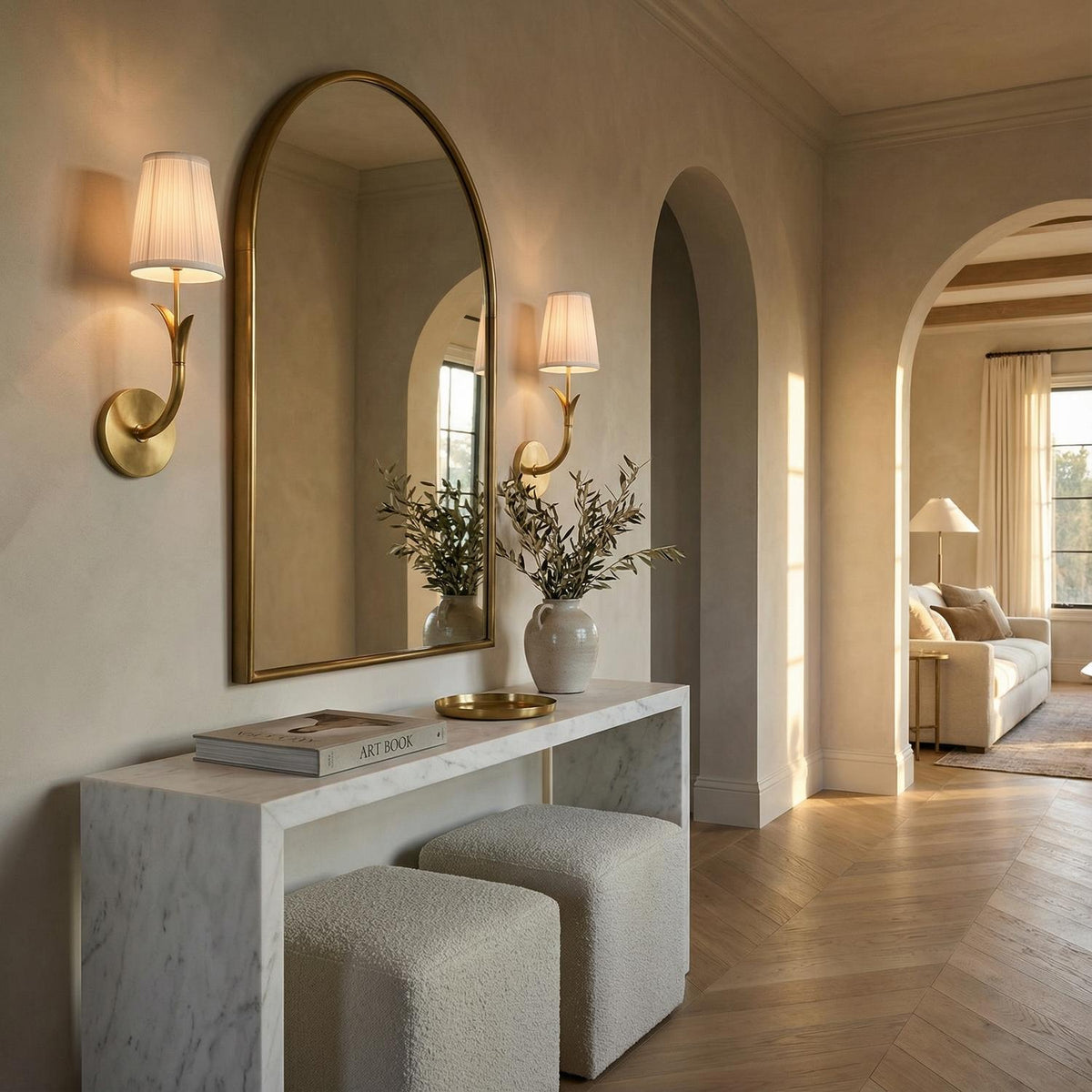
How to Choose And Install Wall Sconces
Wall sconces are one of the easiest ways to add another layer of light without taking up valuable floor or table space. They can provide flattering bathroom lighting, brighten a hallway, replace bedside lamps, or simply add warmth and character to a room. The key is choosing the right style for the space and installing them at a height that works for both the fixture and the people using the space. As a general starting point, install wall sconces with the center of the fixture approximately 60–66 inches from the floor. From there, adjust the height based on ceiling height, fixture size, furniture, and the purpose of the light.
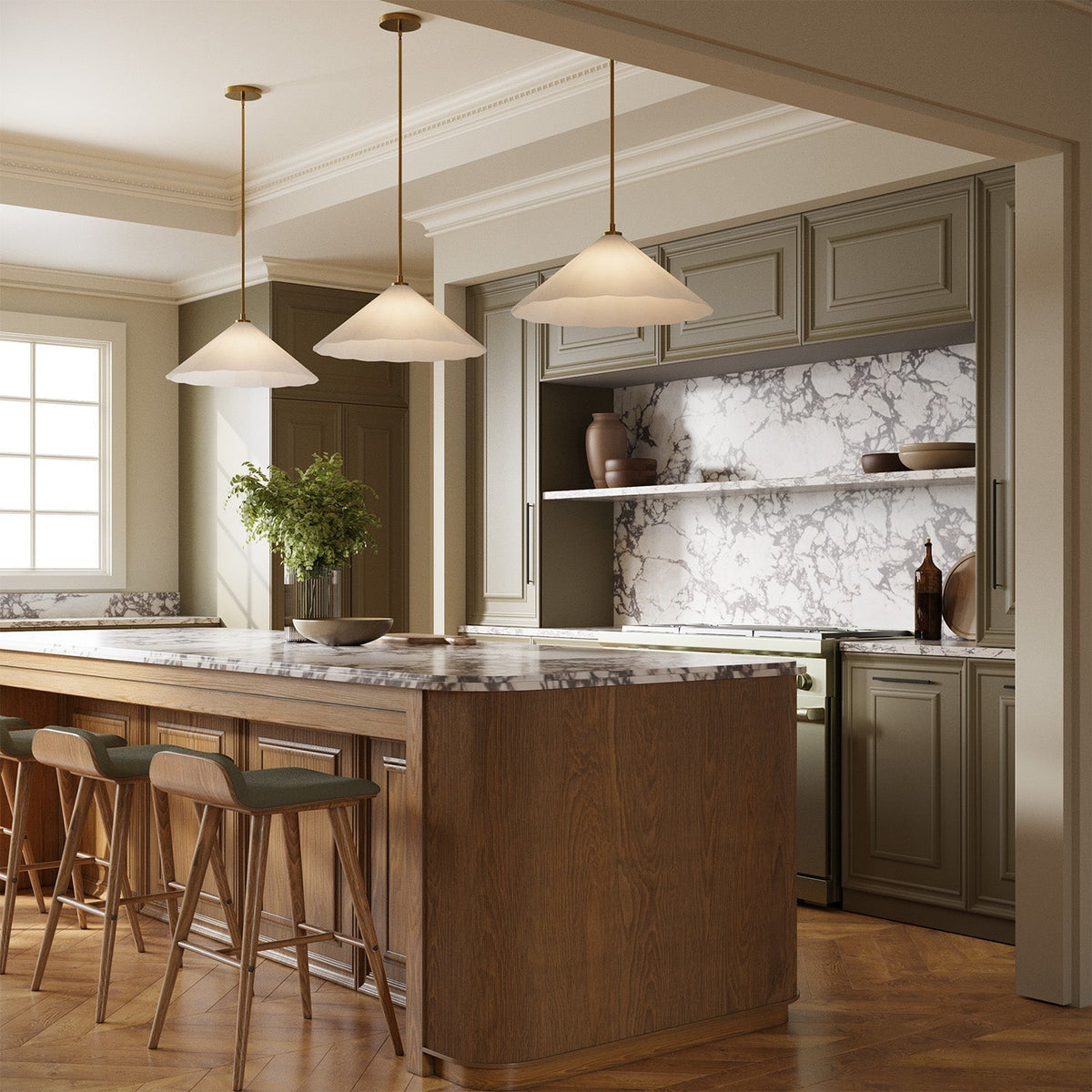
How to Choose Kitchen Lighting
Pendant lights are one of the easiest ways to add both practical light and personality to a kitchen island. Depending on the length of your island and the size of your fixtures, you can use one oversized pendant, a pair of statement lights, or a row of smaller pendants. The goal is to provide even illumination across the work surface while keeping the fixtures visually balanced with the island below.
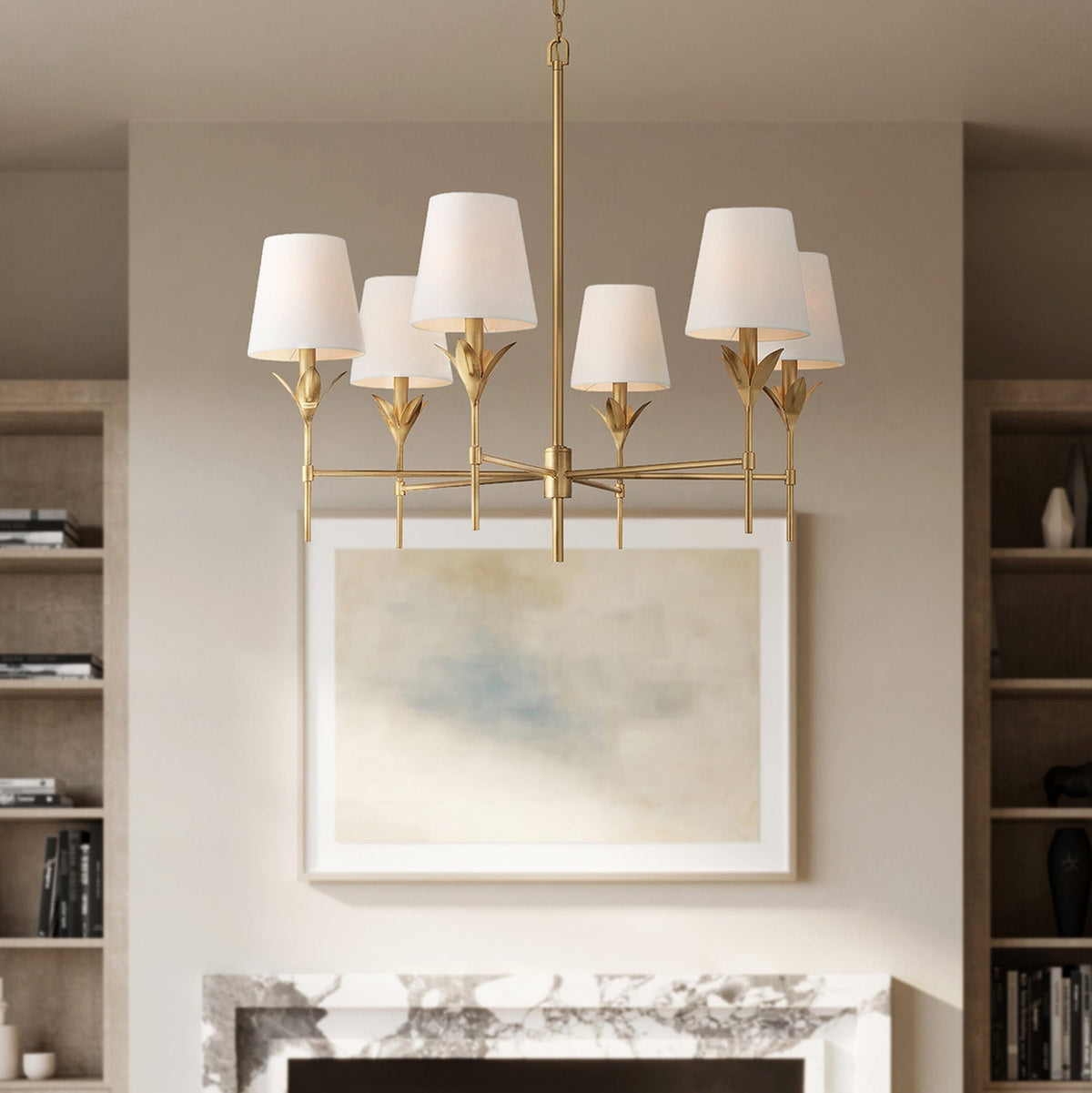
How to Choose The Right Chandelier
Choosing the right chandelier is about finding the perfect balance of size, shape, and style for your home. Whether you’re selecting a chandelier for a dining room, living room, or foyer, the right proportions can make all the difference. With a few simple chandelier sizing and style tips, you can find a fixture that feels beautifully balanced and perfectly suited to your space.
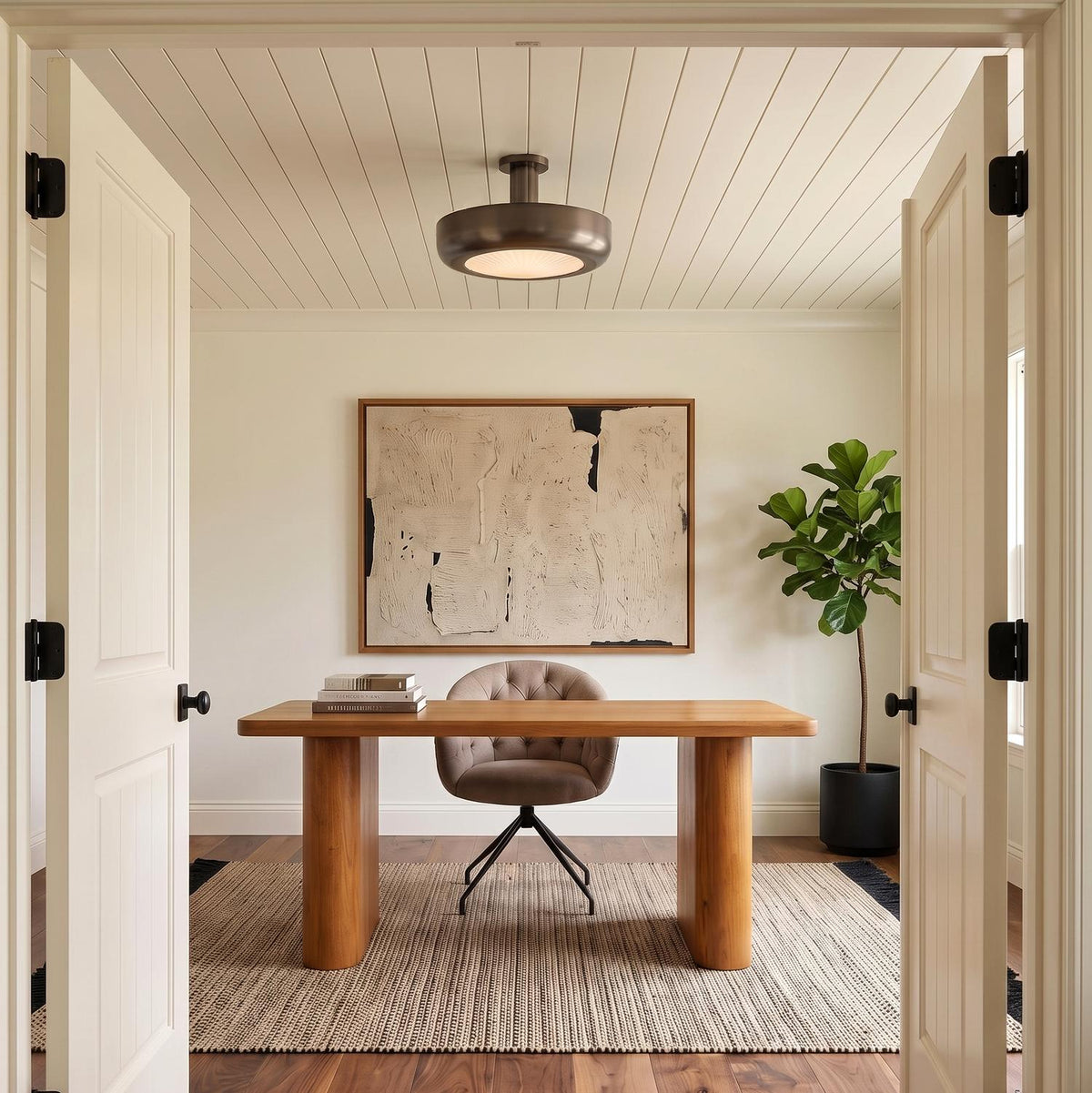
Bright Ideas for the Home Office
Across the spectrum of careers, modern work life is changing. While we adjust to the work from home lifestyle, the home office has become an essential part of our homes. Turning a spare bedroom or den into a home office that projects professionalism and maximizes productivity isn’t rocket science, but it isn’t as simple as swapping the daybed for a desk. This how-to will show you what lighting can do to help make your home office your favorite place to work.
How Lighting Affects Your Home’s Paint Color
Why do your navy blue walls look black at certain times of day? And why does a normally white room appear yellow in the evenings? If you’ve ever experienced these perplexities, you can attest to how much light can affect our perception of color.

Iconic MCM Lighting Designers to Know
Meet the minds behind some of the world’s most popular lights. Mid-Century Modern is a design movement that emerged roughly from the mid-1940s to the late 1960s, flourishing in post-WWII America and Europe. It is characterized by simplicity, functionality, and a strong connection to nature. Lighting played a crucial role in MCM interiors—not just as a functional necessity, but as a form of sculptural art that reflected the era's values: innovation, efficiency, and elegance.
The Globe Pendant Light, A Mid-Century Favorite Then and Now
While the globe pendant light has made a triumphant return, appearing in design magazines and well-decorated contemporary homes as of late, this mid-century fixture never fell out of favor. Since its inception, the globe light fixture has remained a cult favorite among mid-century enthusiasts from California to New York.
Modern Bedroom Lighting Design: Tips and Basics
Modern bedrooms are versatile, intimate spaces. They serve as a physical reflection of your interests and style and as a retreat from daily stresses. Modern bedroom lighting should be designed with attention on equal parts functionality and relaxation. This 101 is a quick guide with tips for getting the bedroom lighting you need in with the modern bedroom lighting style you want.


