
The Globe Pendant Light: A Mid-Century Classic Then and Now

Lighting Expert
November 12, 2026
A perfect sphere of glass suspended from the ceiling may seem almost too straightforward to become a design icon, but that simplicity is exactly what has kept the globe pendant light relevant for generations. It feels equally at home in a 1950s California ranch, a modern city apartment, or a newly renovated kitchen today.
Globe lighting is often associated with Mid-Century Modern design, when architects and designers embraced clean geometry, functional forms, and materials that allowed light to become part of the architecture rather than simply a decorative afterthought.
Today, the globe pendant has evolved far beyond its mid-century origins. Modern materials, refined finishes, and new lighting technology, including both integrated LED designs and traditional socketed styles, have given the classic form a fresh point of view. The result is a familiar silhouette that can feel minimal, sculptural, architectural, or softly decorative while still retaining the simplicity that made it iconic in the first place.

Victoria Pendant 14", Polished Nickel and Opal Ribbed Glass

Oren Pendant 12", Matte Black and Opal Glass

Soren LED Pendant 5", Brushed Brass and Opal Glass

The Globe Light and Mid-Century Modern Design
The globe fixture became especially recognizable in postwar modern homes of the 1950s and 1960s.
One of the best-known examples can be found in the California homes developed by Joseph Eichler. Beginning in the late 1940s, Eichler Homes built nearly 11,000 modern houses characterized by open floor plans, walls of glass, post-and-beam construction, atriums, and strong connections between indoor and outdoor living. Eichler was far from alone in embracing the globe: throughout the mid-century period, architects and lighting designers repeatedly returned to spherical glass forms, drawn to their clean geometry, soft illumination, and ability to complement rather than compete with modern interiors.
Simple white-glass globe lights became a familiar feature of these homes, hanging from ceilings in kitchens, hallways, dining areas, and other open spaces. Today, original globe fixtures remain so closely tied to Eichler architecture that homeowners actively search for vintage examples and period-appropriate replacements.
Photo Archive: Julius Shulman, Case Study House #22, Pierre Koenig, Los Angeles, California, 1960
Why Globe Pendant Lights Still Feel Modern
The globe’s greatest strength is its purity of form.
A sphere is instantly recognizable, but it doesn’t belong exclusively to one design period. Change the glass, finish, scale, or suspension, and the same basic shape can feel Mid-Century Modern, contemporary, transitional, Art Deco-inspired, or quietly minimalist.
An opal globe with aged brass feels warm and refined. Clear glass paired with black hardware feels crisp and architectural. Ribbed or colored glass adds texture and personality, while oversized globes can feel almost sculptural.
That versatility is what keeps the globe pendant from feeling nostalgic. Rather than reading as a reproduction of the past, today’s designs reinterpret the familiar silhouette in ways that feel completely current.

Image 1. Restored William Krisel Home, CA. Photo by Darren Bradley | Images 2 & 3: Calvin Straub & HabHouse Restoration in Pasadena, CA

Images 1 & 3: Calvin Straub & HabHouse Restoration in Pasadena, CA | Image 2. Restored William Krisel Home, CA. Photo by Darren Bradley
DID YOU KNOW? Glass globe pendants were already common in schools, libraries, and public buildings by the early 20th century, decades before Mid-Century Modern design made the shape a residential icon. Their simple suspended-glass form proved so versatile that designers kept reinterpreting it throughout the century.

How to Use Globe Pendants Over a Kitchen Island
Globe pendants are particularly well suited to kitchen islands because their simple shape works beautifully in multiples.
For a smaller island, one larger globe pendant can create a strong focal point. For longer islands, two or three smaller globes can create rhythm while distributing light more evenly across the countertop.
Keep the fixtures evenly spaced and visually within the footprint of the island.
As a general starting point, hang kitchen island pendants about 30–36 inches above the countertop, then adjust slightly for fixture size, ceiling height, and sight lines.
Filomena Medium Pendant 14", Matte Black and Milk Glass
Multi-Globe Chandeliers & Linear Pendants
The same simple sphere that makes a single pendant feel so timeless becomes much more expressive when repeated across a chandelier design.
Multiple glass globes can be arranged along a linear frame, clustered at different heights, or balanced across branching arms. The repetition creates rhythm and movement while keeping the overall silhouette clean and architectural.
The simplicity of the globe makes it remarkably adaptable. Opal glass paired with aged brass can feel warm and distinctly mid-century, while clear glass, black finishes, or more asymmetrical compositions bring a sharper, more contemporary point of view.
Globe chandeliers work especially well:
• Over long dining tables
• In living rooms
• In open-plan spaces
• In entryways with enough ceiling height
• Anywhere you want a statement fixture that still feels visually light
At Lights.com, collections such as the Castell reinterpret the globe across linear and round chandelier forms, while Duncan pairs spheres with playful, 1970s-inspired proportions.

Maribel 7 Globe Chandelier 29", Satin Brass

Duncan 2 Globe Linear Pendant 47", Matte Black and Opal Glass

Castell 6 Globe Linear Pendant 46", Aged Brass

Globe Lights Aren’t Just for High Ceilings
Love the globe look but don’t have room for a pendant?
A globe flush mount or semi-flush fixture gives you the same soft geometry with much less vertical drop. This makes the shape especially useful in bedrooms, hallways, kitchens, and rooms with standard-height ceilings.
The same idea works on the wall. Globe sconces and vanity lights can repeat the spherical shape throughout a home without making every fixture identical.
Castell 3 Globe Semi-Flush 20", Aged Brass
How Big Should a Globe Pendant Be?
Because the shape is so simple, scale becomes especially important. A very small globe can disappear in a large room, while an oversized sphere can become a dramatic architectural feature.
As a general guide:
• Small globes (less than 10"): Great over sinks, bedside areas, or grouped in multiples.
• Medium globes (12" to 16"): Work well over kitchen islands, breakfast tables, and smaller dining spaces.
• Large or oversized globes (18" or larger): Can stand alone over a dining table, in an entryway, or in a room with taller ceilings.
When using multiple pendants, consider the overall composition, not just the size of each globe. Several smaller fixtures together can have as much visual presence as one oversized pendant.

Sol LED Pendant 4", Matte Black

Castell 2 Globe Pendant 15.5", Matte Black and Aged Brass

Tova Pendant 14", Matte Brass with Cloud Opal Glass
From Mid-Century Staple to Modern Classic
The globe pendant has lasted because it never needed much reinvention.
Its appeal comes from the purity of the shape: a simple sphere that can softly diffuse light, showcase a decorative bulb, disappear into a minimal interior, or become the focal point of the room.
What once felt perfectly at home beneath the post-and-beam ceilings of a mid-century California house still feels just as relevant over a transitional kitchen island today.
That is the difference between a trend and a classic.
Explore globe pendant lights at Lights.com, from simple single-globe fixtures to sculptural multi-light designs in opal, clear, and decorative glass.
Frequently Asked Questions
Open a question to see the answer.
Still have questions?
Talk to our lighting teamYou Might Also Like
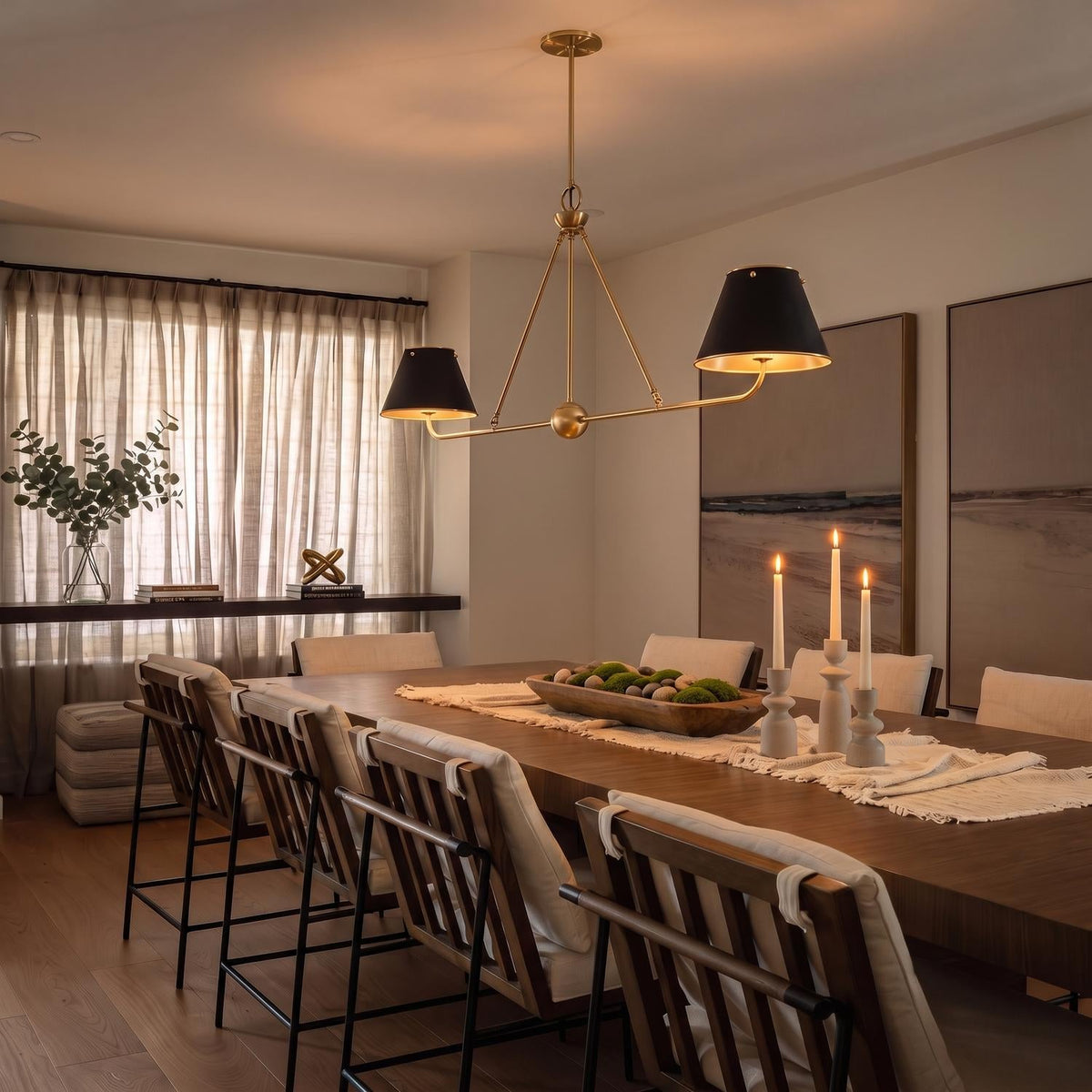
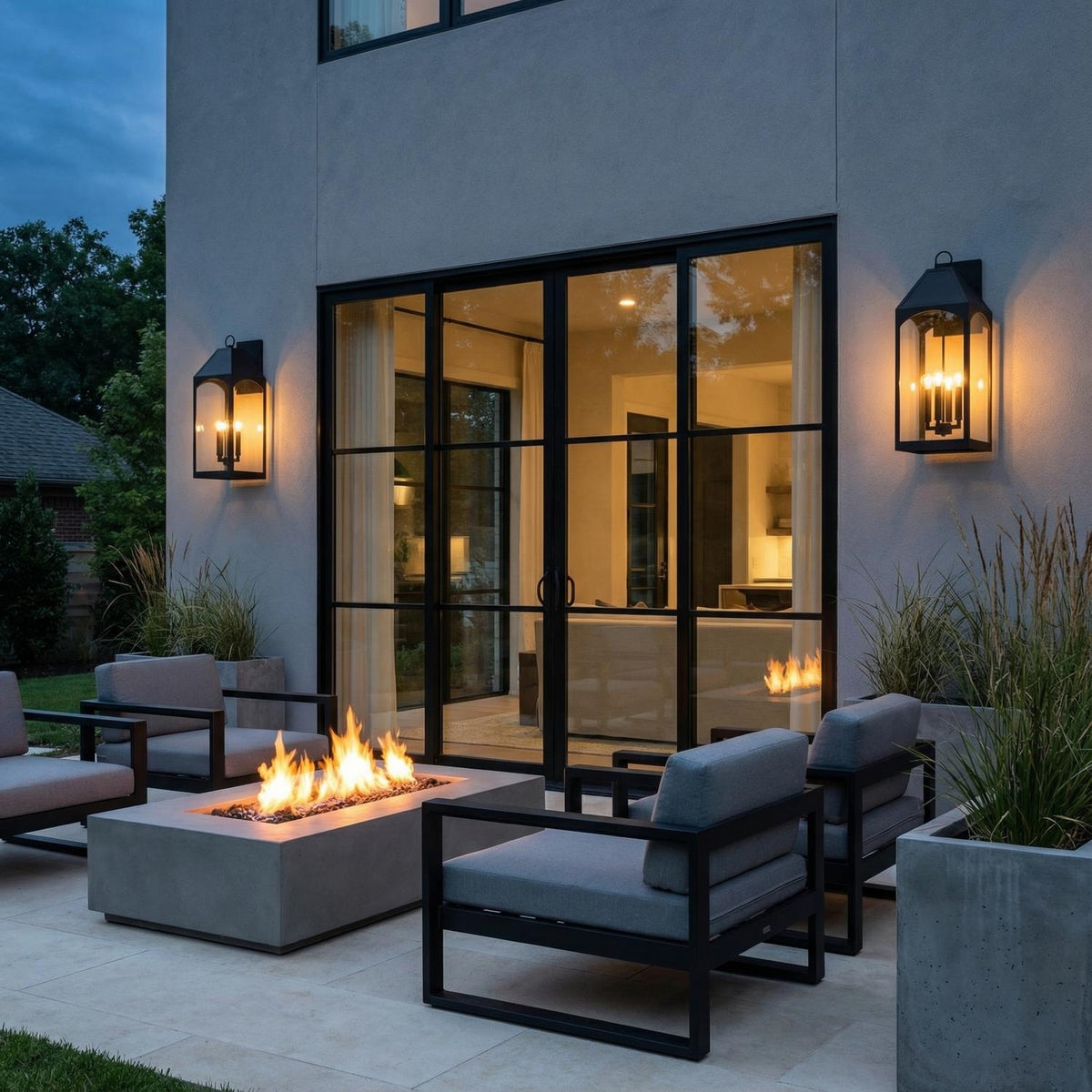
How to Light an Outdoor Patio or Porch for Safety & Ambiance
The best outdoor lighting plans use layers of light, combining wall lights, ceiling or hanging fixtures, portable lamps, and pathway lighting to give each area the right amount of illumination. Whether you're lighting a small covered porch or a large backyard entertaining area, here's how to get started.
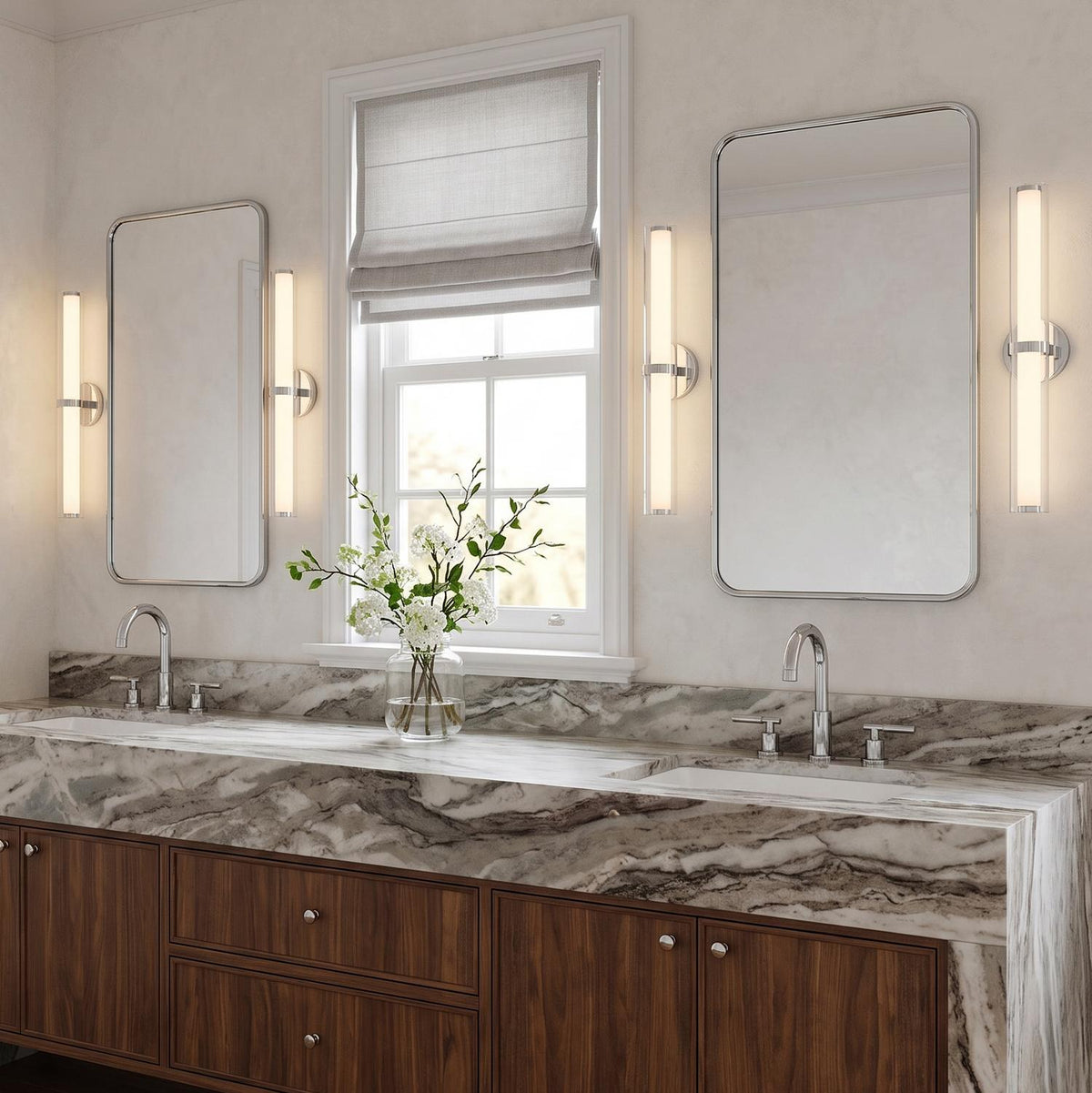
What Is CRI? A Guide to Color Rendering Index in Lighting
Have you ever noticed that paint, fabrics, or finishes look rich and vibrant in one room but dull or slightly off in another? The difference may come down to Color Rendering Index, or CRI. CRI helps describe how naturally colors appear under a light source, making it an important specification to consider when choosing indoor lighting.
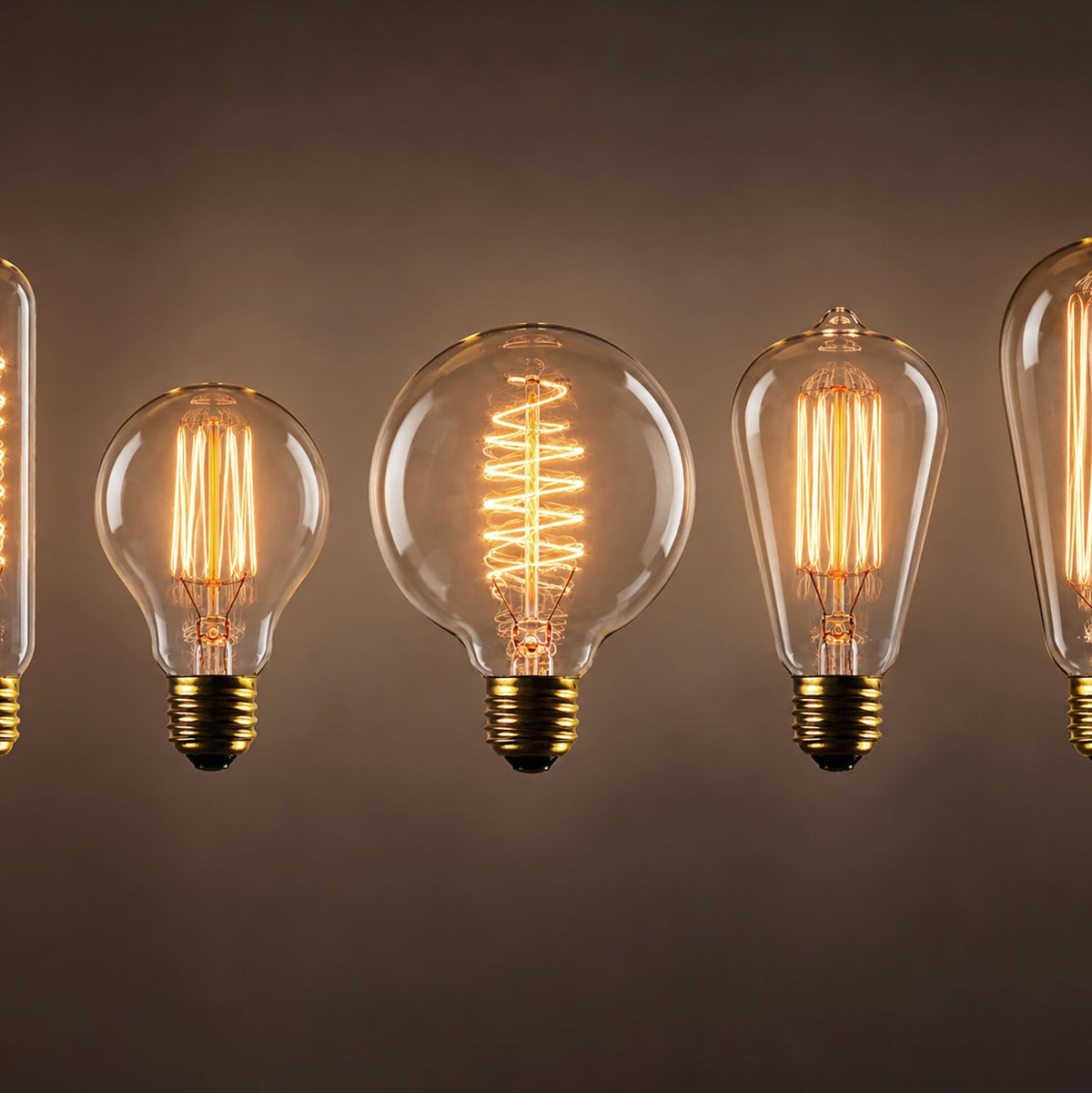
Light Bulb Types Guide: Bases, Shapes & Glass Finishes
Choosing the right light bulb comes down to three things: the base, the shape, and the glass finish. The base needs to match your fixture’s socket, and the bulb shape needs to physically fit inside the fixture, shade, or glass. A slim wall sconce may need a narrow T-shaped bulb, while a large globe bulb like a G40 might fit the socket but still be too wide for the fixture. Today, most replacement bulbs are LED instead of incandescent, but familiar base types like E12, E26, G9, and GU10 and bulb shapes like A19, B10, and G25 are still widely used. Once you know what those codes mean, choosing the right replacement gets much easier.

Five Iconic MCM Lighting Designers to Know
Meet the minds behind some of the world’s most popular lights. Mid-Century Modern is a design movement that emerged roughly from the mid-1940s to the late 1960s, flourishing in post-WWII America and Europe. It is characterized by simplicity, functionality, and a strong connection to nature. Lighting played a crucial role in MCM interiors—not just as a functional necessity, but as a form of sculptural art that reflected the era's values: innovation, efficiency, and elegance.
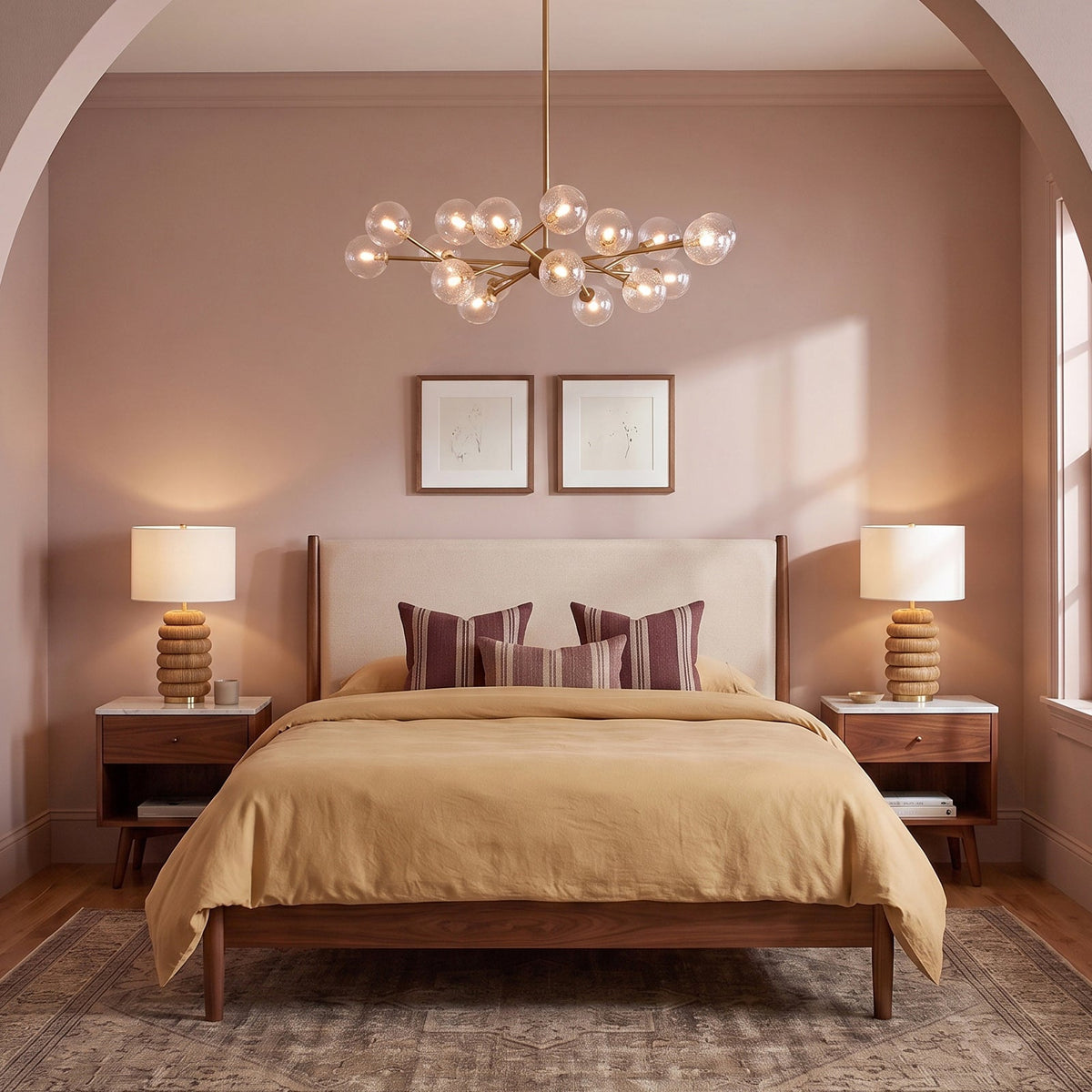
How Lighting Affects Your Home’s Paint Color
Ever pick the perfect paint color, only to have it look completely different once it’s on the wall? You’re not imagining it. Natural light, light bulb color temperature, brightness, and even the direction your room faces can bring out different undertones and make the same paint appear warmer, cooler, lighter, or darker throughout the day. Understanding how lighting affects paint color can help you choose both your paint and lighting with fewer surprises.
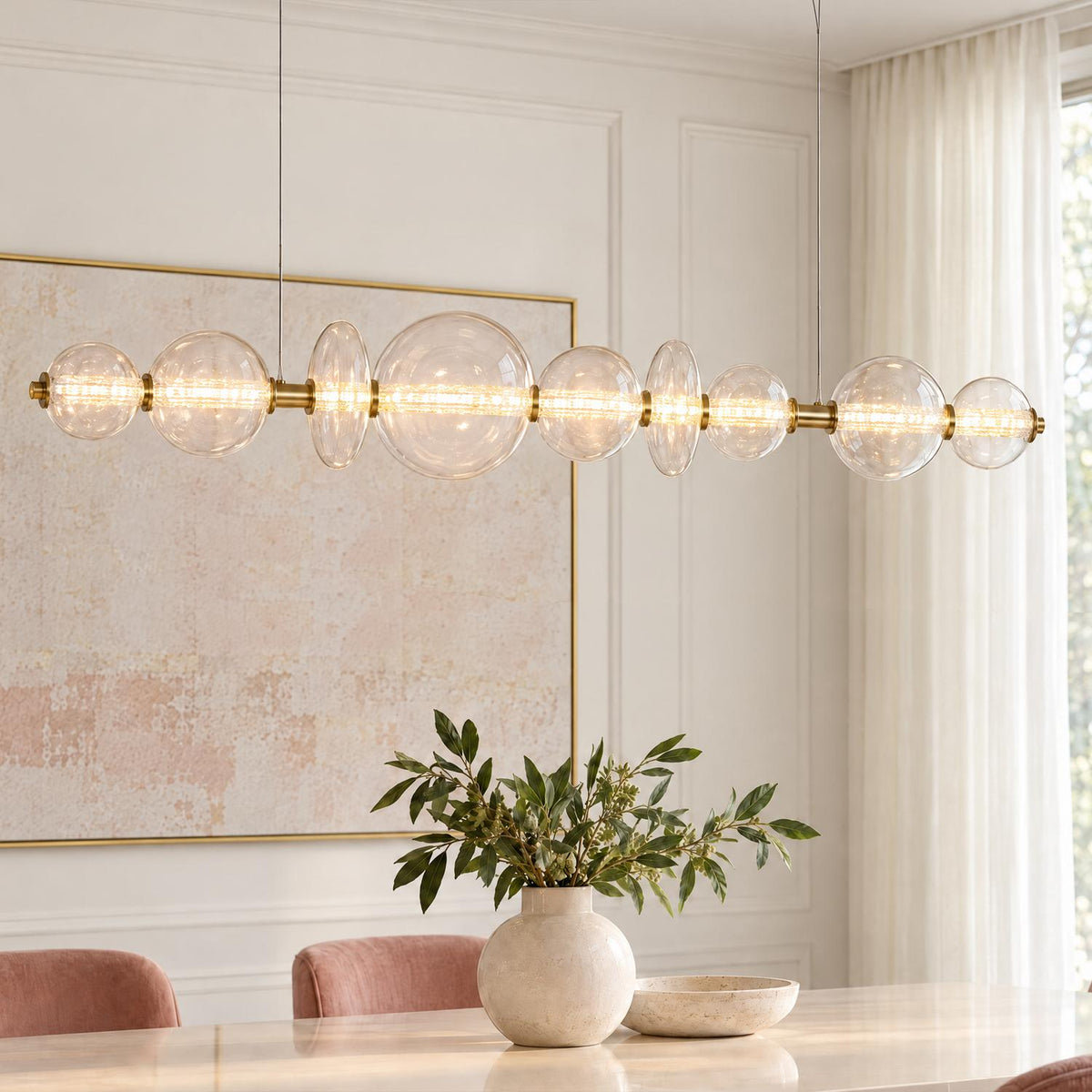
How Many Lumens Do You Need Per Square Foot?
Finding the right balance of light in a room comes down to one simple measurement: lumens. While wattage tells you how much electricity a bulb uses, lumens tell you how bright the light actually is. Calculating the total lumens required for any room ensures your space feels warm, welcoming, and properly lit without feeling uncomfortably dim or overly bright. The simple formula is Square Feet × Foot-Candles = Total Lumens Needed. Multiply your room's length by width to find square feet, then multiply by the foot-candle recommendation for that room type.
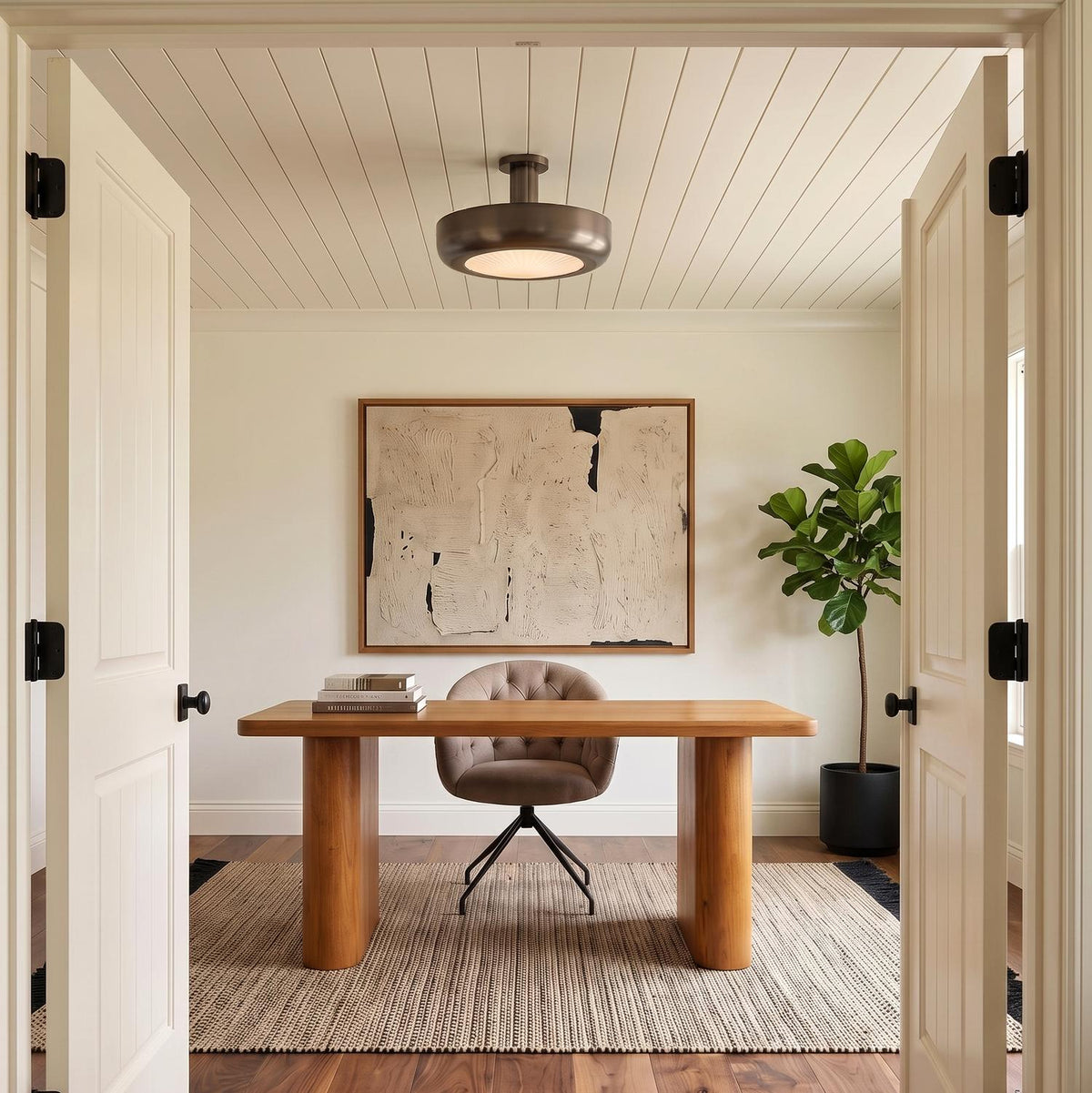
Home Office Lighting Ideas: How to Light Your Workspace
Good home office lighting should feel comfortable, flexible, and bright enough for everything from hand-drawn sketches to video calls. The best setup combines general overhead lighting with focused task lighting and a few softer secondary light sources, creating a workspace that feels polished without being harsh.


