
What Is CRI? A Guide to Color Rendering Index in Lighting

Lighting Expert
October 28, 2026
Have you ever noticed that paint, fabrics, or finishes look rich and vibrant in one room but dull or slightly off in another? The difference may come down to Color Rendering Index, or CRI. CRI helps describe how naturally colors appear under a light source, making it an important specification to consider when choosing indoor lighting.
SHOP LED WALL LIGHTSQuick Reference: CRI Scale
CRI Score | What It Means? | Good For |
|---|---|---|
90+ CRI | Excellent color rendering; colors appear natural and vibrant | Living spaces, kitchens, bathrooms, dining rooms, artwork, home offices |
80–89 CRI | Good general color rendering | Hallways, entryways, utility spaces, general lighting |
Below 80 CRI | Lower color accuracy; some colors may appear dull or altered | Areas where accurate color appearance is less important |
What Is Color Rendering Index (CRI)?
Color Rendering Index (CRI) is a scale from 0 to 100 that describes how accurately colors appear under a light source. The higher the CRI, the more natural and true-to-life paint colors, fabrics, finishes, food, and skin tones will look.
For residential lighting, 80 CRI is generally considered good, while 90+ CRI offers excellent color rendering. That’s why many high-quality integrated LED fixtures—including many of the LED fixtures at Lights.com—are designed with 90 CRI lighting.
Tip: CRI tells you about the quality of the color you see, not how bright, warm, or cool the light is.
What Does 90+ CRI Mean For Your Home?
A 90+ CRI light source helps the colors and finishes in your home look richer, clearer, and closer to how they were intended to appear.
• Paint, Fabrics & Decor: Helps subtle undertones and rich colors remain visible instead of looking dull or washed out.
• Skin Tones: Provides more natural-looking light around bathroom mirrors and vanities.
• Food & Finishes: Helps food, wood, stone, cabinetry, and countertops retain their depth and color.
• Artwork & Details: Makes it easier to appreciate variations in artwork, textiles, and decorative finishes.
Where Does High CRI Matter Most?
Kitchens & Dining Rooms
High-CRI lighting helps food, cabinetry, countertops, wood finishes, and decorative materials look more vibrant and natural. It’s especially useful over kitchen islands, dining tables, and other areas where color and detail are part of the experience.
Tip: Look for 90+ CRI integrated LED pendants, chandeliers, and ceiling lights when you want food and finishes to look their best.
Bathrooms & Vanities
Accurate color is especially important around a bathroom mirror. High-CRI lighting helps skin tones appear more natural, making it a great choice for daily grooming, shaving, and makeup application.
For the most flattering vanity lighting, combine 90+ CRI with well-positioned sconces on either side of the mirror whenever possible.
Living Spaces, Artwork & Home Offices
Living rooms and bedrooms often include layered colors and textures, from paint and upholstery to natural wood, rugs, and artwork. High-CRI lighting helps preserve those subtle differences instead of flattening them.
It’s also helpful in home offices, especially if you work with design samples, fabrics, artwork, photography, or other materials where accurate color matters.
CRI vs. Color Temperature: What's The Difference?
CRI and color temperature describe two different qualities of light.
CRI tells you how accurately colors appear.
Color temperature, measured in Kelvin (K), tells you how warm or cool the light itself appears.
For example, a warm 2700K fixture and a cooler 4000K fixture can both have a CRI of 90 or higher.
• 2700K: Soft, warm white
• 3000K: Warm white with a slightly cleaner appearance
• 4000K: Cooler, crisper white
What Is R9?
You may occasionally see an R9 value listed alongside CRI. R9 measures how well a light source renders deep red tones, which can affect the appearance of skin, food, fabrics, and warm interior finishes.
Standard CRI does not include R9 in its main average, so a strong R9 score can provide additional information when especially accurate color rendering is important.
For most everyday residential shopping, however, looking for a 90+ CRI rating is an easy way to identify lighting with excellent overall color quality.
Look For 90+ CRI Integrated LED Lighting
Many modern light fixtures use integrated LED technology, meaning the LED light source is built directly into the fixture rather than using replaceable bulbs.
When comparing integrated LED fixtures, CRI is one of the specifications worth checking. Many Lights.com integrated LED fixtures feature 90 CRI, providing excellent color rendering along with the energy efficiency, long life, and streamlined design benefits of LED lighting.
Tip: If two integrated LED fixtures have a similar style, brightness, and color temperature, CRI can be another useful specification when deciding between them.
Frequently Asked Questions
Still have questions?
Talk to our lighting teamYou Might Also Like
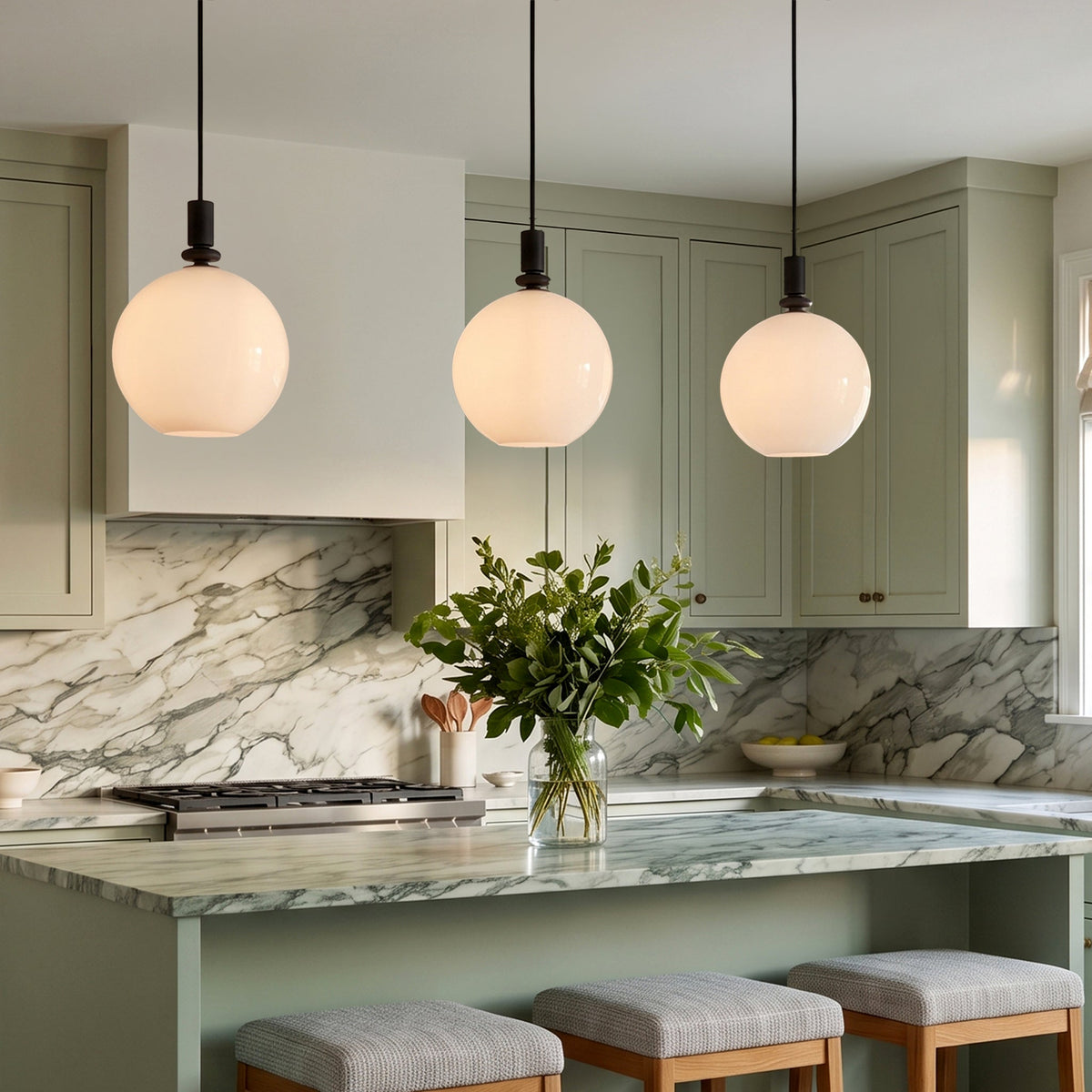
The Globe Pendant Light: A Mid-Century Classic Then and Now
A perfect sphere of glass suspended from the ceiling may seem almost too straightforward to become a design icon, but that simplicity is exactly what has kept the globe pendant light relevant for generations. It feels equally at home in a 1950s California ranch, a modern city apartment, or a newly renovated kitchen today. Today, the globe pendant has evolved far beyond its mid-century origins. Modern materials, refined finishes, and new lighting technology, including both integrated LED designs and traditional socketed styles, have given the classic form a fresh point of view. The result is a familiar silhouette that can feel minimal, sculptural, architectural, or softly decorative while still retaining the simplicity that made it iconic in the first place.
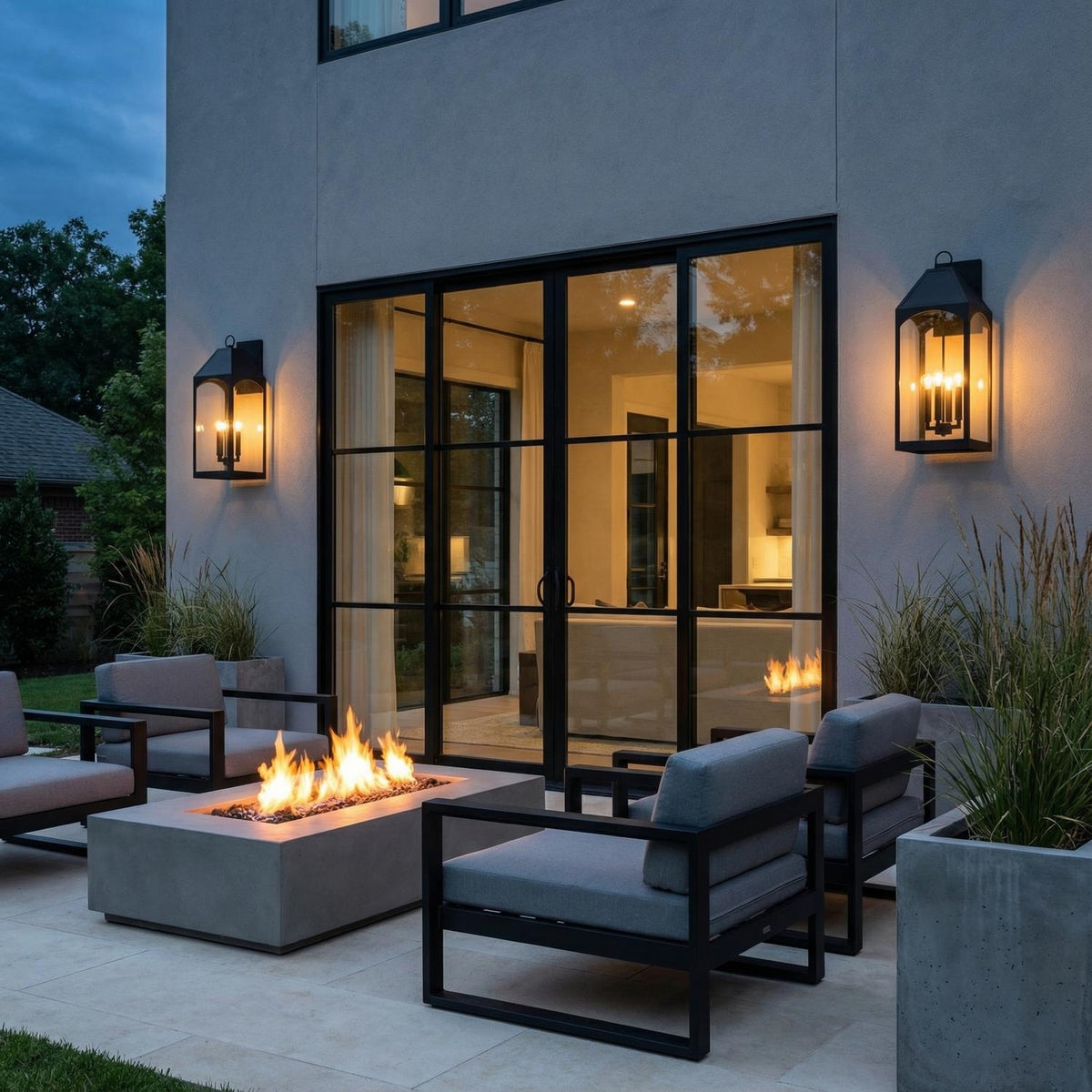
How to Light an Outdoor Patio or Porch for Safety & Ambiance
The best outdoor lighting plans use layers of light, combining wall lights, ceiling or hanging fixtures, portable lamps, and pathway lighting to give each area the right amount of illumination. Whether you're lighting a small covered porch or a large backyard entertaining area, here's how to get started.

Light Bulb Types Guide: Bases, Shapes & Glass Finishes
Choosing the right light bulb comes down to three things: the base, the shape, and the glass finish. The base needs to match your fixture’s socket, and the bulb shape needs to physically fit inside the fixture, shade, or glass. A slim wall sconce may need a narrow T-shaped bulb, while a large globe bulb like a G40 might fit the socket but still be too wide for the fixture. Today, most replacement bulbs are LED instead of incandescent, but familiar base types like E12, E26, G9, and GU10 and bulb shapes like A19, B10, and G25 are still widely used. Once you know what those codes mean, choosing the right replacement gets much easier.

Five Iconic MCM Lighting Designers to Know
Meet the minds behind some of the world’s most popular lights. Mid-Century Modern is a design movement that emerged roughly from the mid-1940s to the late 1960s, flourishing in post-WWII America and Europe. It is characterized by simplicity, functionality, and a strong connection to nature. Lighting played a crucial role in MCM interiors—not just as a functional necessity, but as a form of sculptural art that reflected the era's values: innovation, efficiency, and elegance.
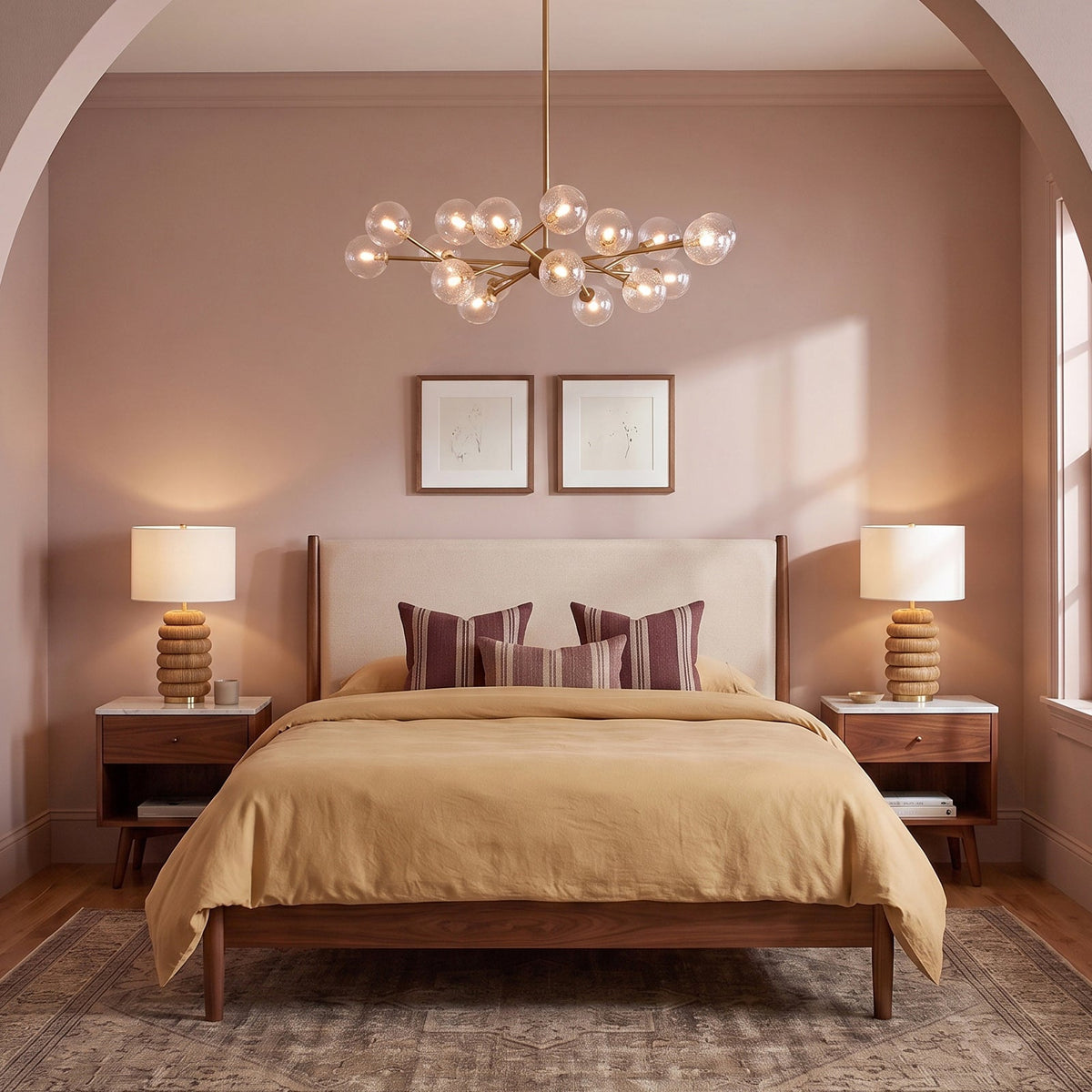
How Lighting Affects Your Home’s Paint Color
Ever pick the perfect paint color, only to have it look completely different once it’s on the wall? You’re not imagining it. Natural light, light bulb color temperature, brightness, and even the direction your room faces can bring out different undertones and make the same paint appear warmer, cooler, lighter, or darker throughout the day. Understanding how lighting affects paint color can help you choose both your paint and lighting with fewer surprises.
How Many Lumens Do You Need Per Square Foot?
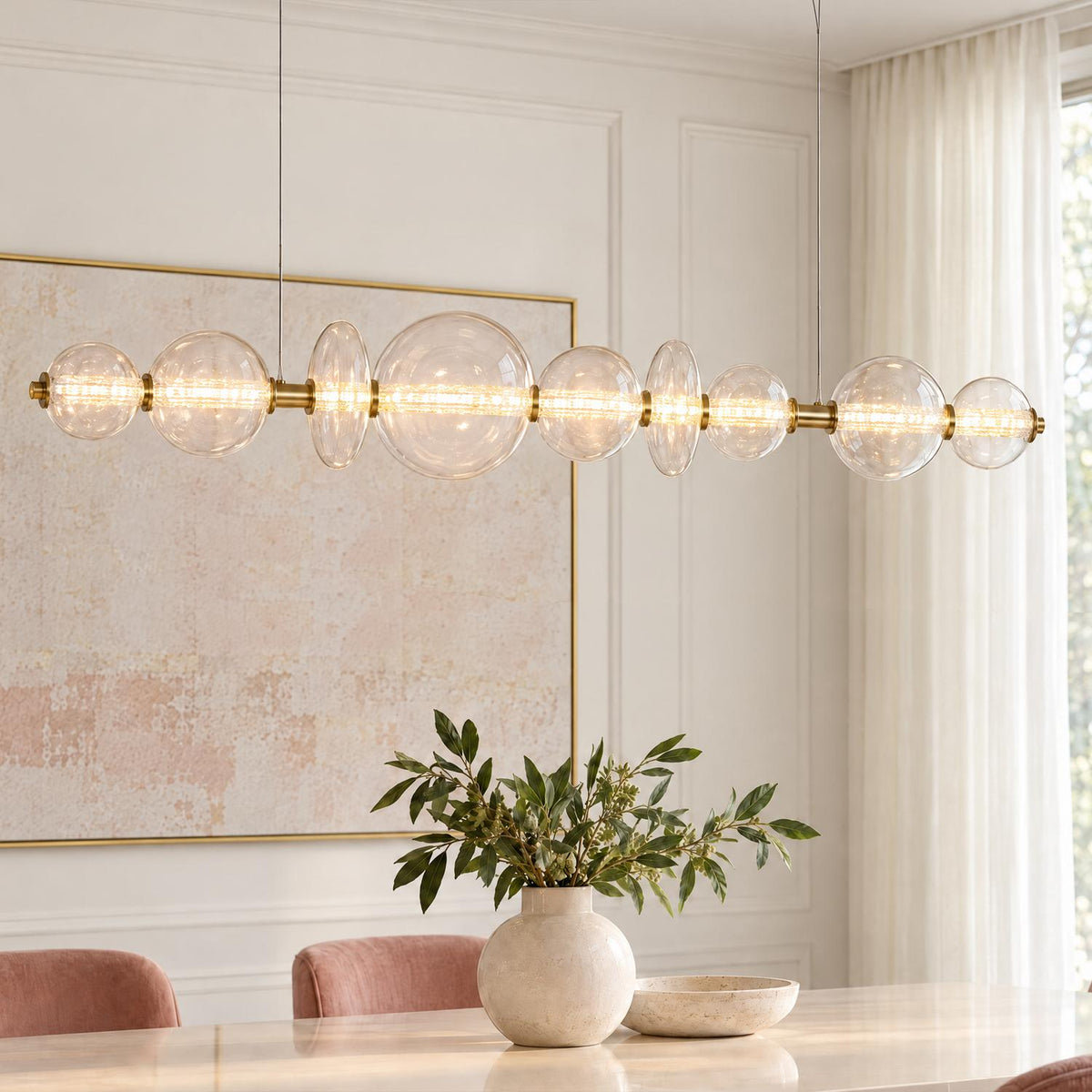
Finding the right balance of light in a room comes down to one simple measurement: lumens. While wattage tells you how much electricity a bulb uses, lumens tell you how bright the light actually is. Calculating the total lumens required for any room ensures your space feels warm, welcoming, and properly lit without feeling uncomfortably dim or overly bright. The simple formula is Square Feet × Foot-Candles = Total Lumens Needed. Multiply your room's length by width to find square feet, then multiply by the foot-candle recommendation for that room type.
Home Office Lighting Ideas: How to Light Your Workspace
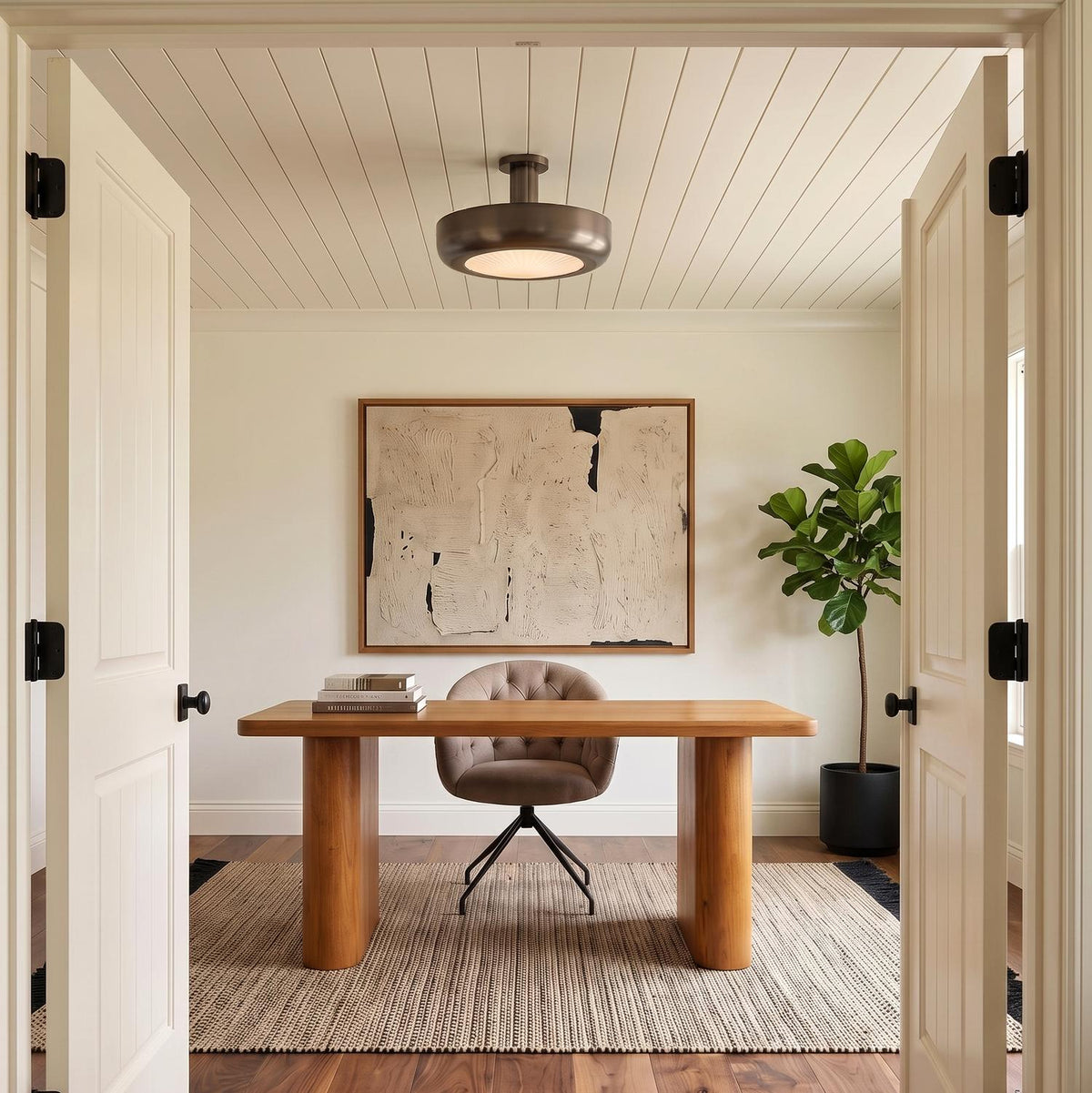
Good home office lighting should feel comfortable, flexible, and bright enough for everything from hand-drawn sketches to video calls. The best setup combines general overhead lighting with focused task lighting and a few softer secondary light sources, creating a workspace that feels polished without being harsh.


