
A Guide to Light Bulb Types: Bases, Shapes & Glass Finishes

Lighting Expert
October 22, 2026
Choosing the right light bulb comes down to three things: the base, the shape, and the glass finish. The base needs to match your fixture’s socket, and the bulb shape needs to physically fit inside the fixture, shade, or glass. A slim wall sconce may need a narrow T-shaped bulb, while a large globe bulb like a G40 might fit the socket but still be too wide for the fixture.
Today, most replacement bulbs are LED instead of incandescent, but familiar base types like E12, E26, G9, and GU10 and bulb shapes like A19, B10, and G25 are still widely used. Once you know what those codes mean, choosing the right replacement gets much easier.
Start With The Bulb Base
The bulb base is the part that physically connects the bulb to the socket. It is the first specification to check when replacing a bulb because even bulbs that look similar may use completely different bases.
Most household bulbs use either a screw-in Edison base or a pin-style base.
Common Light Bulb Base Types & Shapes
Base | Common Name | How It Connects | Common Uses | Popular Bulb Shapes |
|---|---|---|---|---|
E12 | Candelabra | Small screw base | Chandeliers, sconces, lanterns, ceiling fans | B10, CA10, C7, G16.5 |
E17 | Intermediate | Medium-small screw base | Appliances, specialty lamps, some ceiling fans | A15, C9, S11 |
E26 | Medium/Standard | Standard screw base | Table lamps, floor lamps, pendants, flush mounts | A19, G25, G40, ST18, T10 |
G9 | Bi-Pin | Push-in loop pins | Compact chandeliers, sconces, vanity lights | Capsule, T4 |
GU10 | Twist-Lock | Push and twist | Track lighting, spotlights, directional fixtures | MR16, PAR16 |
What Do E12 and E26 Mean?
The “E” stands for Edison Screw, and the number refers to the approximate diameter of the threaded base in millimeters.
• E12 = 12mm candelabra base
• E17 = 17mm intermediate base
• E26 = 26mm medium base
E26 is the standard household screw base used on many table lamps, floor lamps, pendants, and ceiling fixtures.
E12 is much smaller and is common in chandeliers and decorative sconces.

The Grayden Lantern Pendant shown with three E12 base, B11 shape clear Candelabra bulbs.

The Aria Semi-Flush Mount Ceiling Light shown with one E26 base, G25 shape clear bulb.
Tip: If you’re replacing an existing bulb, check the base first. A B10 bulb and an A19 bulb describe different shapes, but either may be available with different base types depending on the product.
What Are G and GU Bulb Bases?
Unlike Edison screw bases, G and GU bulbs use pins to connect to the socket.
G9 Bulbs:
G9 bulbs use two looped pins and push directly into the socket. Their compact size makes them common in smaller chandeliers, wall sconces, vanity fixtures, and other fixtures where a standard screw bulb would be too large.
GU10 Bulbs
GU10 bulbs have two short pins with wider ends. Insert the bulb into the socket and twist it to lock it into place. GU10 bulbs are especially common in track lighting, recessed spotlights, and directional accent lighting.

Tip: G9 and GU10 may both have two pins, but they are not interchangeable. Always match the exact base listed on your fixture.
Light Bulb Shapes: What Do A19, B10, G25 and ST18 Mean?
The base tells you whether the bulb fits the socket, while the shape code tells you what the glass portion of the bulb looks like. Shape matters for more than just appearance. A bulb may have the correct base but still be too wide, too tall, or the wrong profile for the fixture.
A19 — Standard Household Bulb
The familiar pear-shaped light bulb used in table lamps, floor lamps, ceiling lights, and many enclosed fixtures. Often paired with an E26 base.
B10 and CA10 — Candlelabra Bulbs
Slim decorative bulbs designed to resemble a candle flame. Common in chandeliers, sconces, lanterns, and other fixtures where the bulb is visible. Often paired with an E12 candelabra base.
G16.5, G25 and G40 — Globe Bulbs
Round bulbs commonly used in bathroom vanity lighting, exposed-bulb fixtures, and decorative pendants.
A G25 bulb is larger than a G16.5, while a G40 has an even larger rounded profile. Globe bulbs can make a strong decorative statement, but always check the available space inside the fixture before choosing a larger size.
ST18 / ST19 — Edison-Style Bulbs
Elongated vintage-inspired bulbs designed to showcase decorative LED filaments. These work especially well in clear glass pendants, open cages, exposed sockets, and industrial-style fixtures.
T Bulbs — Tubular
Tubular bulbs are useful in fixtures where a standard round bulb would be too bulky, including picture lights, slim wall sconces, decorative pendants, and specialty fixtures.
Always check both the bulb’s diameter and overall length, since two tubular bulbs with the same T-number can still be different lengths.
Tip: A fixture may specify both a recommended bulb shape and a base type. For example, “B10, E12” means a candle-shaped B10 bulb with an E12 candelabra base.
Clear vs. Frosted Light Bulbs
Once you know the correct base and shape, consider how visible the bulb will be. The glass finish can dramatically change both the look of the fixture and how comfortable the light feels.
Clear Bulbs
Clear bulbs reveal the LED filament or internal components and create a crisp, decorative appearance.
Best for:
• Clear glass shades
• Open chandeliers
• Lanterns
• Exposed-bulb fixtures
• Fixtures where the bulb is part of the design
Clear LED filament bulbs are especially useful when you want the look of a traditional incandescent bulb with modern LED efficiency.
Frosted & White Bulbs
Frosted bulbs diffuse the light, helping soften bright hot spots and conceal the internal LED components.
Best for:
• Frosted or opal glass shades
• Bedside lamps
• Vanity lights
• Reading lamps
• Fabric shades
• Fixtures where the bulb is at eye level
Frosted bulbs work best behind frosted or opal glass, creating a smooth, even glow. Clear filament bulbs can show visible lines or hot spots through the shade.
Amber & Vintage-Style Bulbs
Amber-tinted bulbs are designed to recreate the warm appearance of early incandescent or Edison-style lighting.
Best For:
• Vintage and industrial fixtures
• Decorative pendants
• Open sconces
• Accent lighting
• Creating a moodier feel
Keep in mind that amber glass can make the light appear warmer and may reduce how bright or color-accurate the room feels.
Tip: Clear bulbs can create more noticeable glare when the bulb is directly in your line of sight. Choose the brightness (lumens) carefully in exposed fixtures, or, even better, install them on a dimmer switch.
Incandescent vs. LED Bulbs
Bulb bases like E12, E26, G9, and GU10 describe the connection to the fixture, not the technology producing the light.
That means an older fixture originally designed for an incandescent E12 or E26 bulb can generally use an LED bulb with the same base, provided the LED also meets the fixture’s voltage, size, and wattage requirements.
Today, LED bulbs are the standard choice for most household lighting. Traditional general-service incandescent bulbs have largely been phased out under U.S. efficiency standards, although some specialty incandescent bulbs are still available.
LED bulbs use much less electricity while still offering familiar bulb shapes, base sizes, warm color temperatures, and dimmable options.
Tip: Replacing an old incandescent bulb? Match the base and bulb shape first, then shop by lumens for brightness rather than trying to match the old wattage exactly.
What Else Should You Check Before Buying Light Bulbs?
Base and shape are only part of the equation. Before buying new light bulbs for your fixtures, also check:
• Lumens: How bright the bulb is.
• Color Temperature: Usually expressed in Kelvin, such as 2700K, 3000K, or 4000K.
• CRI: Look for 90+ when accurate color rendering is important.
• Dimmable: Make sure the bulb is specifically labeled dimmable if used with a dimmer.
• Fixture Wattage Limit: Never exceed the fixture’s maximum rated wattage.
• Physical Size: Make sure the bulb fits inside the shade, glass, or enclosure.
• Enclosed-Fixture Rating: If the bulb will be inside fully enclosed glass, choose an LED approved for enclosed fixtures.
Tip: “60-watt equivalent” describes the approximate brightness of an old 60W incandescent—it does not mean the LED itself uses 60 watts. Lumens are the better measurement for comparing brightness.
Frequently Asked Questions
Still have questions?
Talk to our lighting teamYou Might Also Like
How Many Lumens Do You Need Per Square Foot?
Finding the right balance of light in a room comes down to one simple measurement: lumens. While wattage tells you how much electricity a bulb uses, lumens tell you how bright the light actually is. Calculating the total lumens required for any room ensures your space feels warm, welcoming, and properly lit without feeling uncomfortably dim or overly bright. The simple formula is Square Feet × Foot-Candles = Total Lumens Needed. Multiply your room's length by width to find square feet, then multiply by the foot-candle recommendation for that room type.
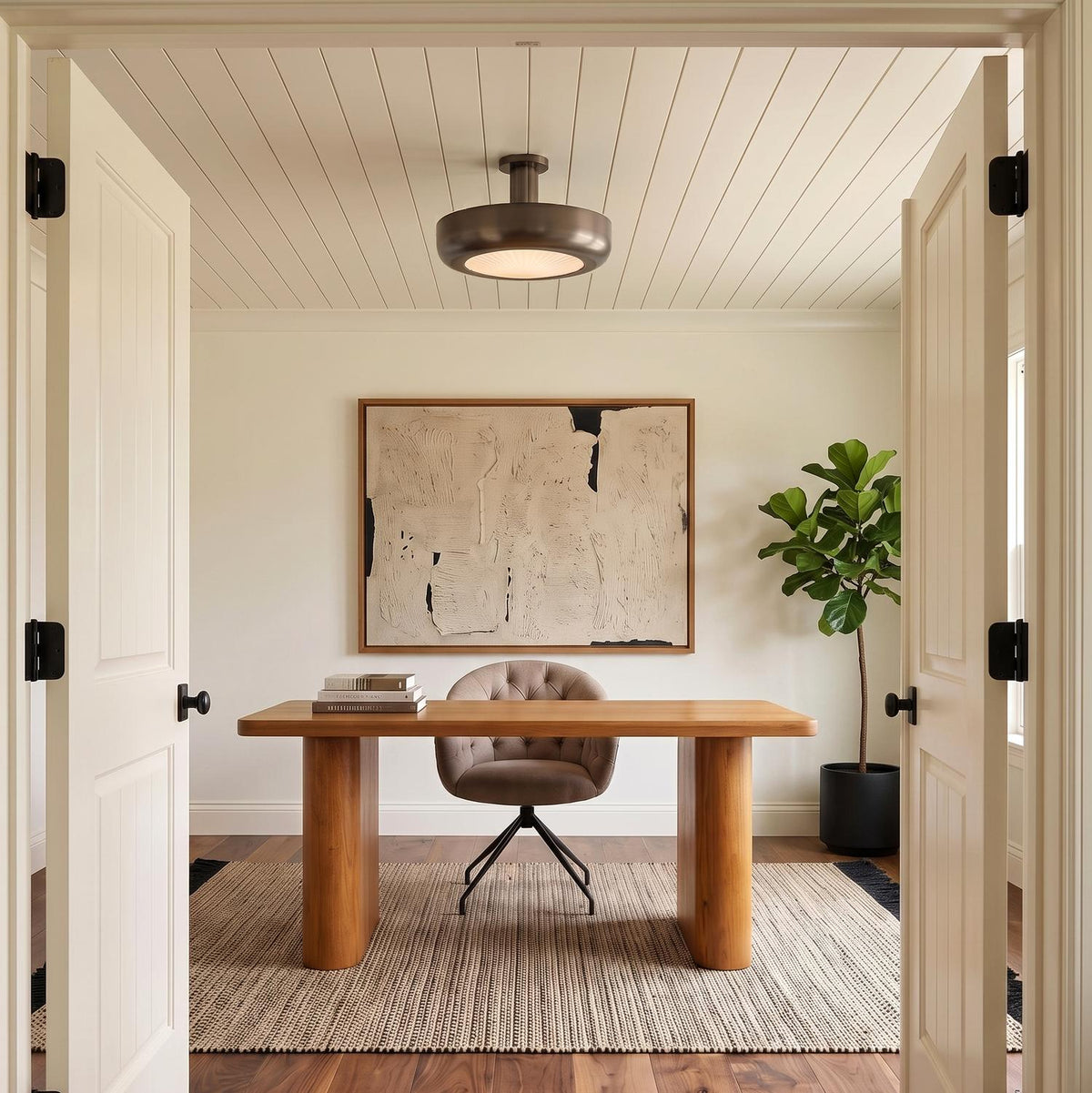
Home Office Lighting Ideas: How to Light Your Workspace
Good home office lighting should feel comfortable, flexible, and bright enough for everything from hand-drawn sketches to video calls. The best setup combines general overhead lighting with focused task lighting and a few softer secondary light sources, creating a workspace that feels polished without being harsh.
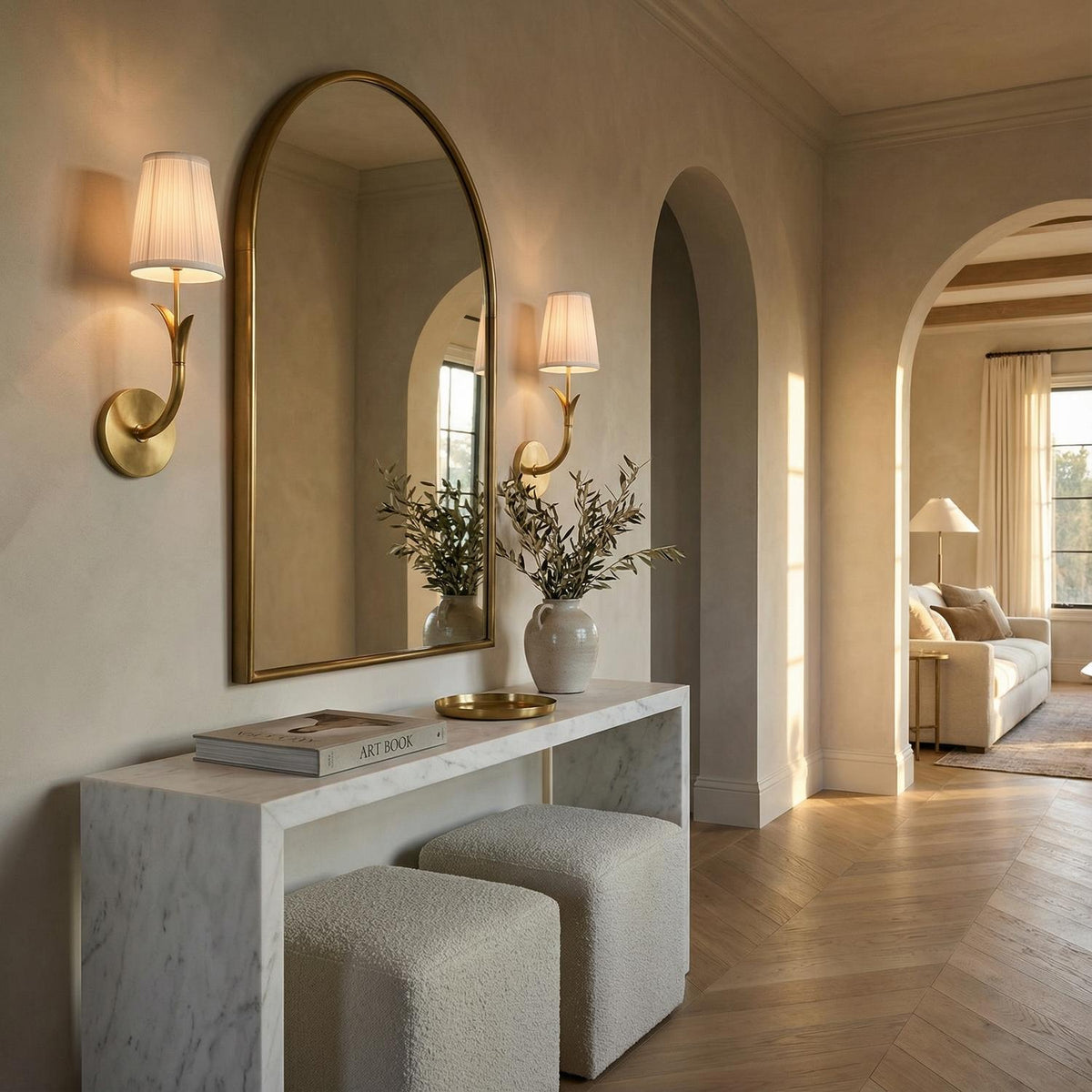
How to Choose And Install Wall Sconces
Wall sconces are one of the easiest ways to add another layer of light without taking up valuable floor or table space. They can provide flattering bathroom lighting, brighten a hallway, replace bedside lamps, or simply add warmth and character to a room. The key is choosing the right style for the space and installing them at a height that works for both the fixture and the people using the space. As a general starting point, install wall sconces with the center of the fixture approximately 60–66 inches from the floor. From there, adjust the height based on ceiling height, fixture size, furniture, and the purpose of the light.
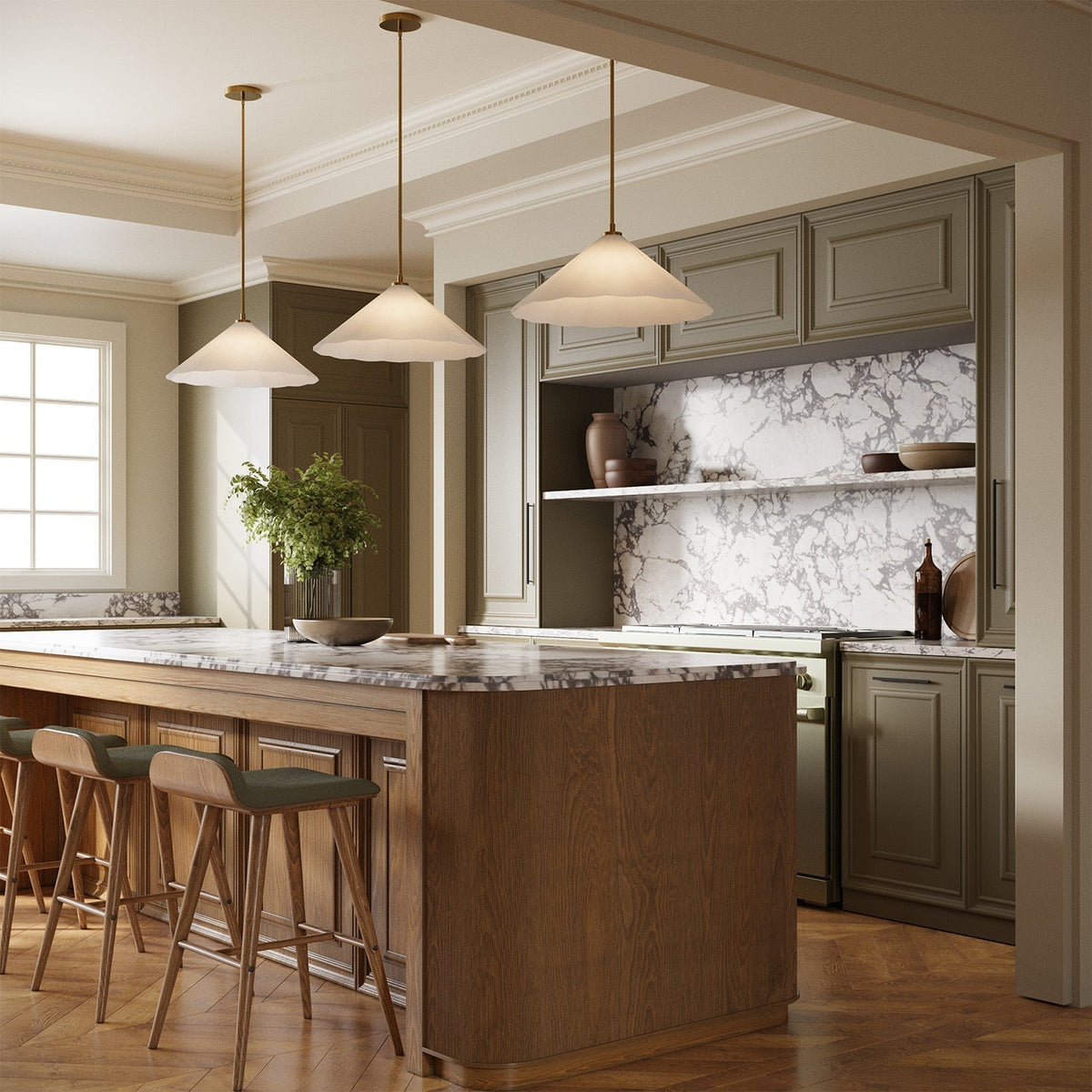
How to Choose Kitchen Lighting
Pendant lights are one of the easiest ways to add both practical light and personality to a kitchen island. Depending on the length of your island and the size of your fixtures, you can use one oversized pendant, a pair of statement lights, or a row of smaller pendants. The goal is to provide even illumination across the work surface while keeping the fixtures visually balanced with the island below.
How to Choose Color Temperature for Every Room
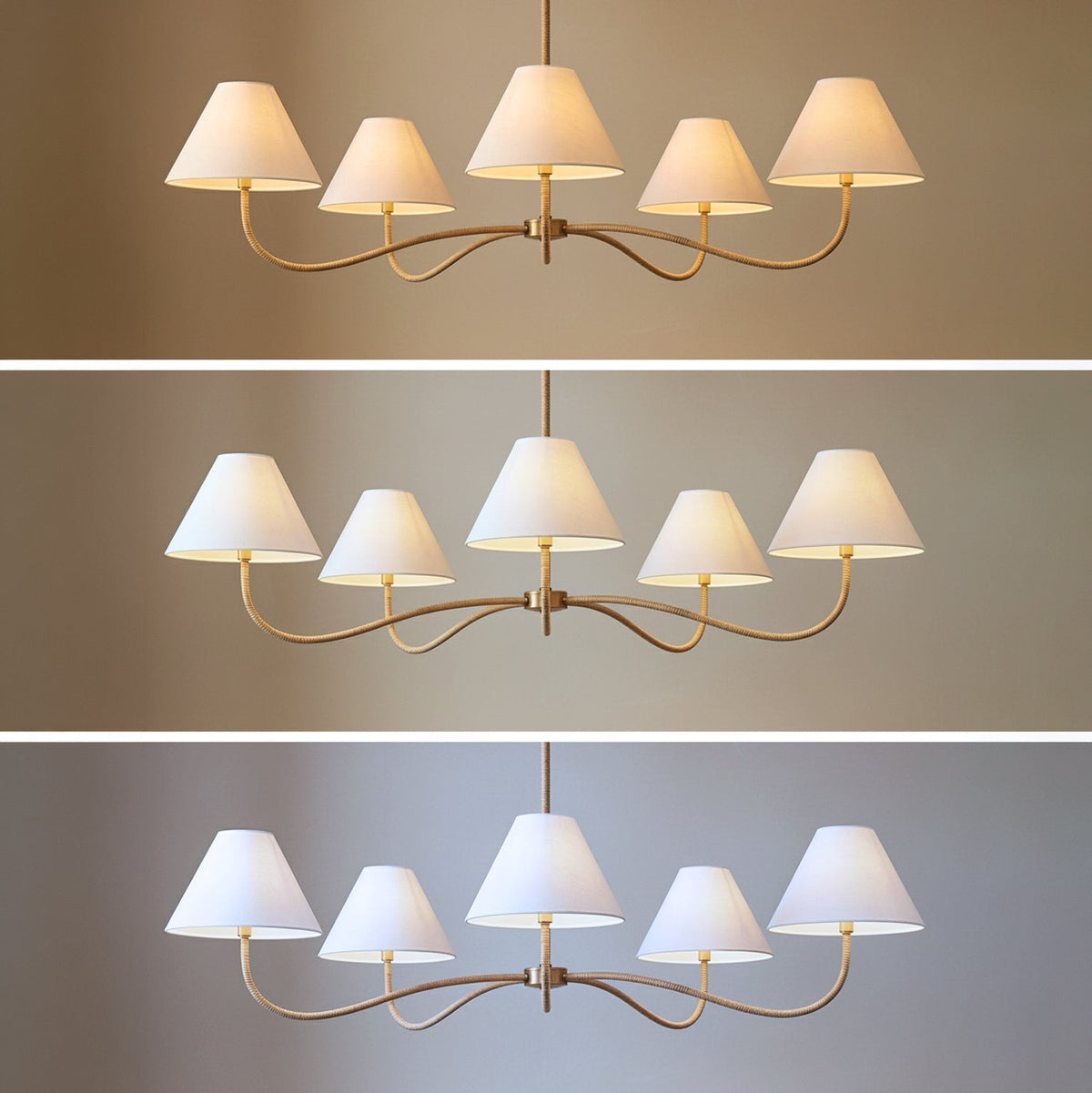
Light color temperature is measured on the Kelvin (K) scale and dictates whether a space feels warm and relaxing or cool and energetic. Choosing between 2700K (Soft White), 3000K (Warm White), 4000K (Cool White), and 5000K (Bright White—typically not recommended for residential spaces) depends on the room's function, decorative finish, and time-of-day usage.
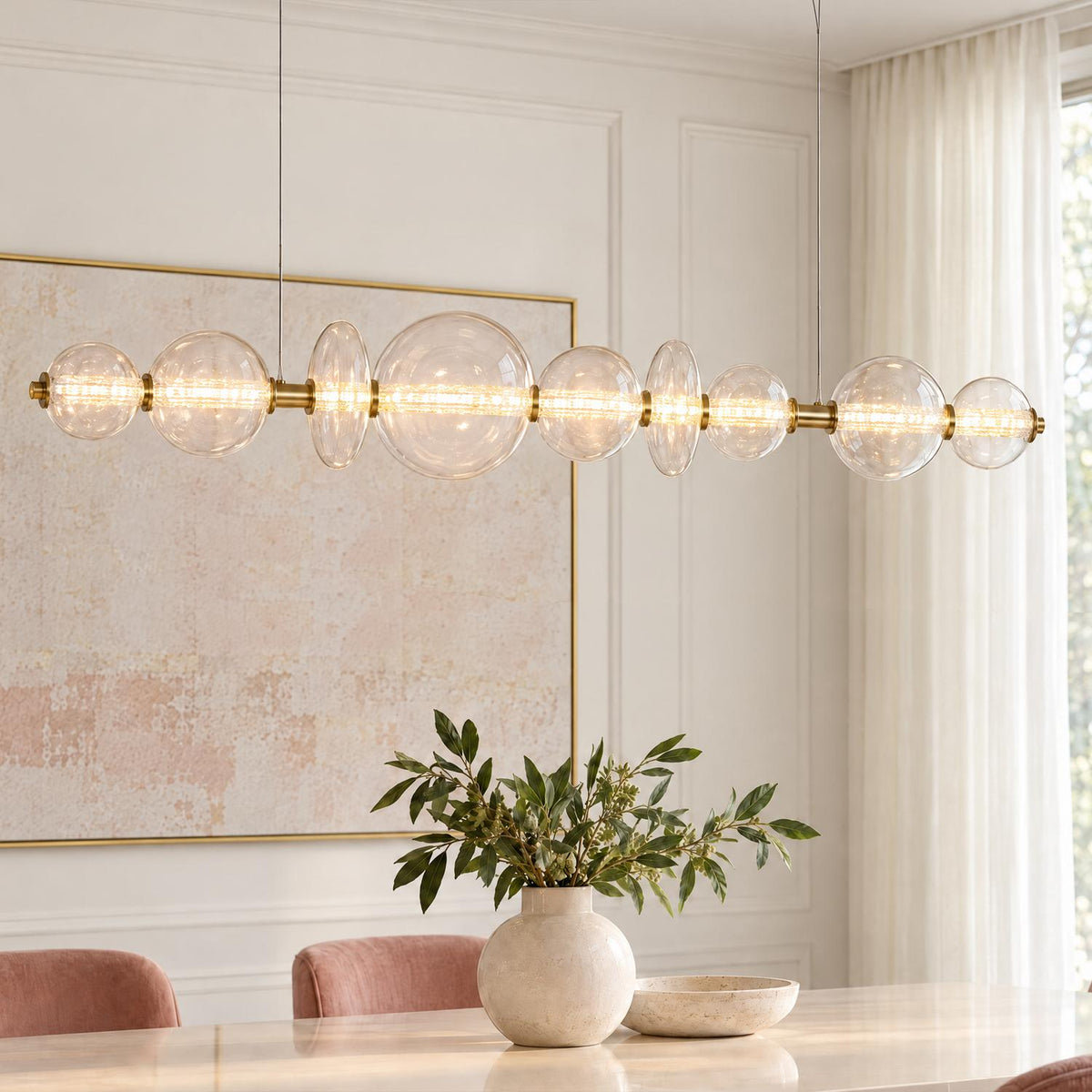
How to Choose The Right Chandelier
Choosing the right chandelier is about finding the perfect balance of size, shape, and style for your home. Whether you’re selecting a chandelier for a dining room, living room, or foyer, the right proportions can make all the difference. With a few simple chandelier sizing and style tips, you can find a fixture that feels beautifully balanced and perfectly suited to your space.
How Lighting Affects Your Home’s Paint Color
Why do your navy blue walls look black at certain times of day? And why does a normally white room appear yellow in the evenings? If you’ve ever experienced these perplexities, you can attest to how much light can affect our perception of color.

Iconic MCM Lighting Designers to Know
Meet the minds behind some of the world’s most popular lights. Mid-Century Modern is a design movement that emerged roughly from the mid-1940s to the late 1960s, flourishing in post-WWII America and Europe. It is characterized by simplicity, functionality, and a strong connection to nature. Lighting played a crucial role in MCM interiors—not just as a functional necessity, but as a form of sculptural art that reflected the era's values: innovation, efficiency, and elegance.


